MCA Pros and Cons: The Honest Truth for Business Owners
Thinking about an MCA? Here is every pro and con laid out honestly so you can make the right decision for your business.
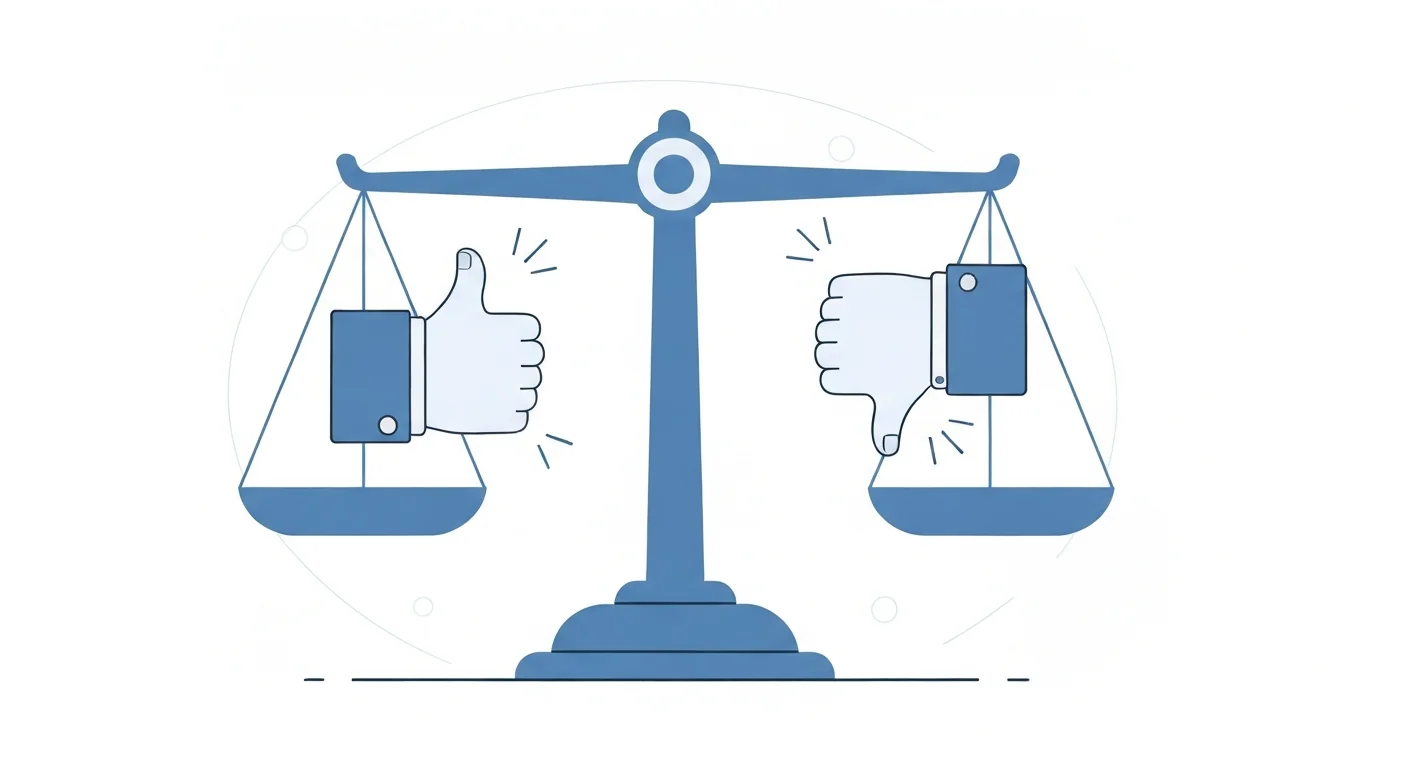
The internet is full of articles that either demonize merchant cash advances or try to sell you one. Neither approach is helpful when you are a business owner trying to make a real decision about funding. The truth is that MCAs have legitimate advantages in very specific situations, and they have serious downsides that affect most businesses that use them.
This guide lays out every pro and con honestly. No sales pitch, no scare tactics. Just the facts you need to decide whether an MCA is right for your business.
The Pros: What MCAs Do Well
There are genuine reasons why MCAs exist and why hundreds of thousands of businesses use them every year. Here are the real advantages.
1. Speed of Funding
MCAs are fast. In many cases, you can apply in the morning and have money in your account by the next business day. Some providers fund within hours. Traditional bank loans take weeks or months. SBA loans can take two to three months or longer.
When you need cash immediately to cover payroll, buy inventory for a rush order, or handle an emergency repair, the speed of an MCA is genuinely valuable. According to the Federal Reserve's Small Business Credit Survey, speed of decision and funding is one of the top reasons small businesses choose alternative financing over banks.
2. Easy Approval
If your business has steady revenue and has been operating for at least a few months, you can probably get approved for an MCA. Bad credit, past bankruptcies, tax liens, and other issues that would disqualify you from a bank loan are often not dealbreakers for MCA companies.
The approval criteria focus primarily on:
- Monthly bank deposits ($10,000+ in most cases)
- Time in business (3 to 12 months minimum)
- Daily deposit consistency
- Industry type
This accessibility means businesses that have been rejected everywhere else can still get funding through an MCA.
3. No Collateral Required
Traditional business loans often require you to pledge specific assets. equipment, inventory, real estate, or personal property. as collateral. If you default, the lender seizes those assets.
MCAs do not require specific collateral in the traditional sense. They are secured by your future receivables and typically backed by a UCC lien (which is a general claim on business assets) and a personal guarantee, but you do not have to pledge your house or your equipment to get funded.
4. Payments That Flex With Revenue (In Theory)
A properly structured MCA takes a percentage of your daily credit card sales or bank deposits. On good days, you pay more. On slow days, you pay less. This flexibility is genuinely helpful for businesses with variable revenue, like restaurants, retail stores, and seasonal businesses.
The caveat is that many MCAs in practice have fixed daily payments that do not actually vary. If your MCA has fixed ACH withdrawals of a set dollar amount every day, you are not getting this benefit. Make sure you understand whether your payments are truly percentage-based or fixed before signing.
5. No Direct Credit Score Impact
Because MCAs are not classified as loans, they are not reported to personal credit bureaus. Taking an MCA will not lower your credit score, and it will not show up on your credit report. This can be useful if you are working on rebuilding your credit or if you want to preserve your credit profile for a future loan application.
These Pros Are Real, But Conditional
Every advantage listed above comes with conditions. Speed is valuable only if you genuinely have a time-sensitive opportunity. Easy approval means nothing if the cost is too high for your business to absorb. Flexible payments only help if your MCA is actually structured that way. Evaluate each pro in the context of your specific situation, not in the abstract.
The Cons: What MCAs Do Poorly
The disadvantages of MCAs are significant and affect most businesses that use them. Understanding these thoroughly before signing is critical.
1. Extremely High Cost
This is the biggest downside by far. MCAs are one of the most expensive forms of business financing available. A typical MCA with a factor rate of 1.30 and a six-month repayment term has an effective APR of roughly 60% to 80%. Some MCAs have effective APRs well above 100% or even 200%.
For context, an SBA loan might charge 7% to 10% APR. An online business loan might charge 15% to 30%. An MCA at 80% APR costs four to eight times more than these alternatives.
2. Daily Payments Crush Cash Flow
Most MCAs collect payments daily through ACH withdrawals from your bank account. This means money leaves your account every single business day before you can use it for payroll, rent, inventory, or anything else.
For a $50,000 advance at a 1.35 factor rate over six months, you are looking at daily payments of roughly $530. That is $2,650 per week or $11,500 per month coming out of your operating cash. For many small businesses, that amount represents a huge chunk of daily revenue.
3. No Benefit to Paying Early
With a traditional loan, paying it off early saves you money because you pay less interest over a shorter period. With an MCA, you owe the full factor rate amount regardless of how quickly you pay. If you took a $50,000 advance with a 1.35 factor rate, you owe $67,500 whether you pay it back in three months or six months.
Some MCA companies offer a small discount (typically 5% to 10%) for early payoff, but this is the exception, not the rule. And even when offered, the savings are much smaller than what you would save by paying off a term loan early.
4. UCC Liens on Your Business
When you take an MCA, the funder files a UCC-1 financing statement against your business. This is a public record that tells other lenders and creditors that the MCA company has a claim on your business assets.
UCC liens make it harder to get other financing because lenders see them as a sign of risk. They also give the MCA company priority in claiming your assets if your business fails. Even after you pay off the MCA, the UCC filing may remain on record for up to five years unless you specifically request its removal.
5. Confession of Judgment Risk
Many MCA agreements include a confession of judgment clause that allows the MCA company to obtain a court judgment against you without a trial, without notice, and without giving you a chance to defend yourself. If you fall behind on payments, the MCA company can use the COJ to freeze your bank accounts and seize assets almost immediately.
While New York reformed its COJ laws in 2019, the practice has not been eliminated everywhere, and COJs signed before the reform may still be enforceable.
6. The Temptation to Stack
When one MCA creates cash flow problems, the temptation to take a second MCA to cover the shortfall is strong. And MCA companies are happy to offer you more money. This is called stacking, and it is one of the most common ways businesses spiral into unmanageable debt.
Each additional MCA adds another daily payment, another factor rate, another UCC lien, and another personal guarantee. Businesses that stack three or four MCAs can find themselves losing 30% to 50% of their daily revenue to MCA payments, making it impossible to operate normally.
7. Limited Regulation and Consumer Protection
MCAs are not classified as loans, so they are largely exempt from the lending regulations that protect borrowers. There are no federal requirements for MCA companies to disclose the APR, no usury limits on the effective interest rate, and no federal licensing requirements. Some states have begun to regulate MCAs, but protections vary widely by location.
This lack of regulation means you are relying on the MCA company to act in good faith, with limited legal recourse if they do not. The Consumer Financial Protection Bureau has expanded its oversight of small business financing, but comprehensive MCA regulation at the federal level does not exist yet.
8. It Hurts the Cash Flow It Was Supposed to Help
The great irony of MCAs is that most businesses take them to solve a cash flow problem, but the MCA itself often makes cash flow worse. The daily payments, the high total cost, and the short repayment term all drain cash from your business faster than many owners anticipate.
If you took an MCA to cover a temporary cash gap, you may find that the MCA payments create a permanent cash gap that persists for the entire repayment period.
Who MCAs Are Actually Good For
Despite all of the cons, there are narrow situations where an MCA is the right choice.
Scenario 1: Time-Sensitive Revenue Opportunity
You have a guaranteed contract or purchase order that will generate enough profit to cover the MCA cost with plenty left over. You need cash in 24 hours to buy inventory or hire workers, and you cannot wait for a traditional loan. The MCA gives you the speed you need, and the revenue from the opportunity pays it off comfortably.
Scenario 2: Short-Term Bridge
You are waiting on a large payment from a customer (like a government contract or insurance reimbursement) that is delayed by 30 to 60 days. You need cash to cover operating expenses in the meantime. The incoming payment will easily cover the MCA repayment. An MCA works here because the repayment is virtually guaranteed from a specific, known source.
Scenario 3: Truly No Other Options
You have been rejected for every other form of financing. your bank said no, the SBA said no, online lenders said no. Your business will close without immediate cash, and you have a clear plan for how the funding will generate enough revenue to cover the MCA cost. This is a last-resort scenario, and you should exhaust every alternative first.
If Your Situation Does Not Match These Scenarios
If you are taking an MCA simply because it is easy to get and you need cash, that is a warning sign. The cost of an MCA is only justified when you have a clear, specific plan for how the funded activity will generate returns that exceed the MCA cost. "I need money" is not a plan. "I need $30,000 to buy inventory for a confirmed $90,000 order shipping next month" is a plan.
The Bottom Line
MCAs are a tool. Like any tool, they work well for specific jobs and poorly for everything else. The problem is that MCA companies market them as a general purpose solution for any business that needs cash, when in reality they are only a good fit for a small number of situations.
Before taking an MCA, ask yourself these questions:
- Have I explored every cheaper alternative? Bank loans, SBA loans, lines of credit, invoice factoring, grants, and revenue based financing are all worth investigating first.
- Can my business absorb the daily payments? Run the numbers. Calculate the daily payment and subtract it from your average daily revenue. Can you still cover all operating expenses?
- Do I have a specific, high-return use for the funds? If the answer is "cover general expenses," an MCA will likely make things worse, not better.
- Have I read and understood every term in the contract? Including the factor rate, holdback percentage, UCC lien terms, personal guarantee, and confession of judgment clause.
- Have I shopped multiple providers? Getting at least three to five quotes gives you negotiating leverage and helps you avoid the worst terms.
If you can answer yes to all five questions and the math works, an MCA may be appropriate. If not, keep looking for alternatives. Your business deserves better than the most expensive option on the table.
Frequently Asked Questions
What are the main advantages of an MCA?
What are the biggest risks of taking an MCA?
Is an MCA ever a good idea?
How much more expensive is an MCA compared to a bank loan?
Sources
- Federal Reserve. Small Business Credit Survey. Annual data on how small businesses use and evaluate financing products.
- U.S. Small Business Administration. Federal loan programs for comparison with MCA costs.
- New York State Senate. S6395. Confession of judgment reform legislation.
- Consumer Financial Protection Bureau. Federal oversight of small business financing products.