What is a Merchant Cash Advance (MCA)? The Complete Guide
Learn what a merchant cash advance is, how it works, what it costs, who qualifies, and whether it is the right financing option for your small business.
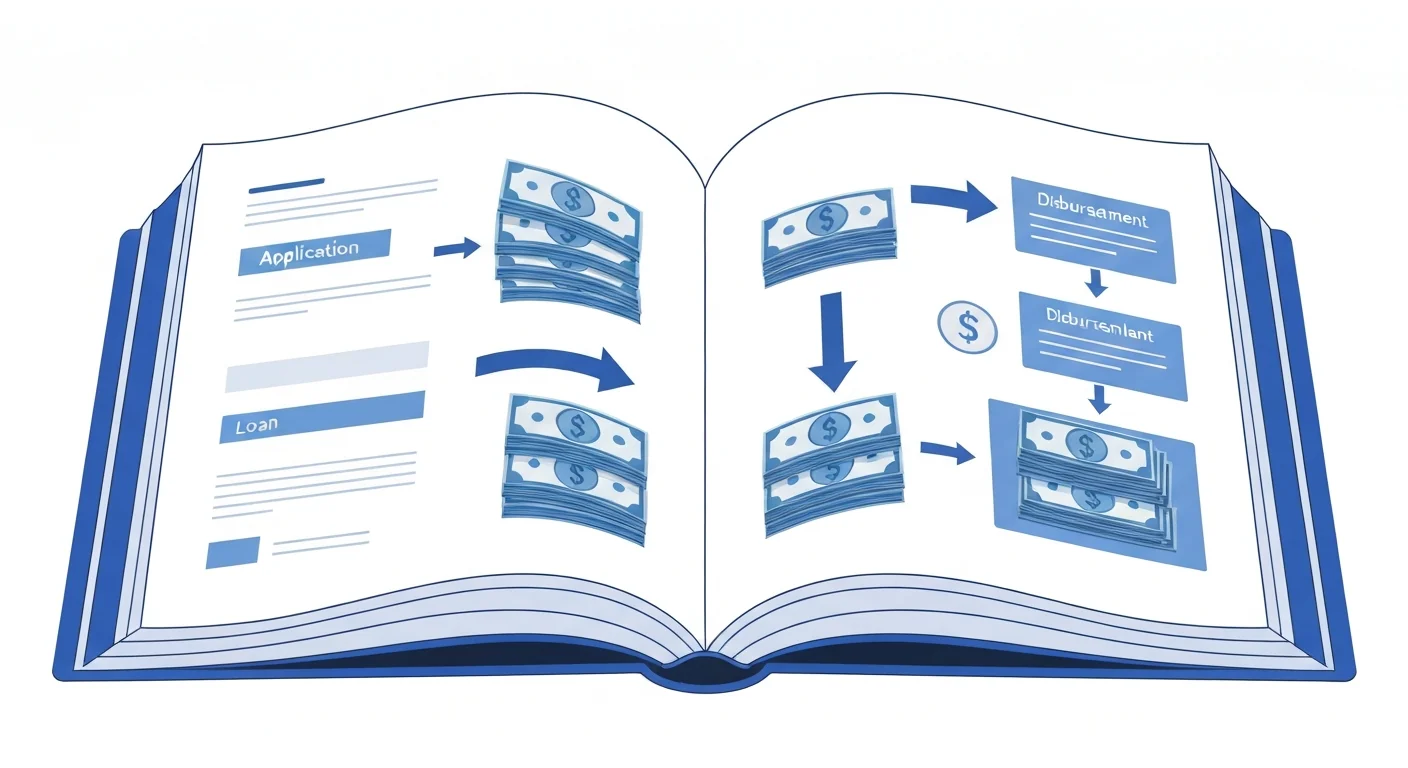
What is a Merchant Cash Advance?
A merchant cash advance (MCA) is a type of business financing in which a company sells a portion of its future credit card sales or revenue in exchange for a lump sum of cash upfront. Despite the name, a merchant cash advance is not a loan. It is structured as a commercial purchase agreement. the MCA provider purchases your future receivables at a discount, and you repay by surrendering a percentage of your daily or weekly sales until the agreed-upon amount has been collected.
This distinction matters more than most business owners realize. Because MCAs are structured as purchases of future receivables rather than loans, they fall outside the scope of most state and federal lending regulations. The Federal Trade Commission (FTC) has issued guidance to small business owners on understanding the difference between various financing products, including MCAs, and why that distinction affects the protections available to you.
A Brief History of MCAs
Merchant cash advances emerged in the late 1990s and early 2000s as an alternative financing option for businesses that processed a high volume of credit card transactions. primarily restaurants, retail shops, and hospitality businesses. The original model was straightforward: MCA companies would partner with credit card processors to automatically divert a fixed percentage of daily card sales toward repayment.
The 2008 financial crisis accelerated the growth of the MCA industry dramatically. Traditional banks tightened lending standards, leaving millions of small businesses without access to conventional credit lines. MCA providers filled that gap by offering fast funding with minimal paperwork and more flexible qualification criteria. According to the Federal Reserve's Small Business Credit Survey, non-bank financing sources including MCAs have become an increasingly significant part of the small business financing landscape.
Today, the MCA industry has evolved well beyond credit card-based repayment. Modern MCAs often use Automated Clearing House (ACH) withdrawals to debit a business's bank account directly, making them accessible to businesses that do not process a high volume of card transactions. The industry is estimated to provide tens of billions of dollars in funding annually to small businesses across the United States.
What is an MCA?
A Merchant Cash Advance is not a loan. It is a company buying a portion of your future sales at a discount. You get cash now, and they take a cut of your daily revenue until they get their money back. plus a hefty fee.
How Does an MCA Work?
Understanding the mechanics of a merchant cash advance is critical before you consider applying for one. Here is how the process works from start to finish.
Step 1: Application
The MCA application process is notably simpler than applying for a traditional business loan. Most MCA providers require just a few basic documents: three to six months of business bank statements, a valid government-issued ID, proof of business ownership, and sometimes recent credit card processing statements. The entire application can typically be completed online in under 30 minutes.
Unlike traditional lenders, MCA providers place less emphasis on your personal credit score and more emphasis on the health of your daily revenue. They want to see consistent cash flow coming through your business bank account, because that is what will fund the repayment.
Step 2: Approval and Offer
Approval decisions are often made within 24 hours, and sometimes within a few hours of submitting your application. If approved, you will receive an offer that includes three key numbers: the advance amount (how much cash you will receive), the factor rate (the multiplier that determines your total repayment), and the holdback or retrieval rate (the percentage of your daily revenue that will be deducted for repayment).
For example, you might receive an offer for a $50,000 advance with a factor rate of 1.30 and a holdback rate of 15%. This means you would receive $50,000 upfront and owe $65,000 in total ($50,000 multiplied by 1.30), with 15% of your daily revenue being withheld until that $65,000 is fully repaid.
Step 3: Funding
One of the biggest draws of MCAs is speed. Once you accept the offer and sign the agreement, funds are typically deposited into your business bank account within one to three business days. In some cases, same-day funding is available. This speed makes MCAs attractive to businesses facing urgent cash needs. an unexpected equipment failure, a time-sensitive inventory opportunity, or a payroll shortfall.
Step 4: Repayment
Repayment happens automatically and begins almost immediately. usually the next business day after funding, or within the first week. There are two primary repayment methods:
Credit card split. The MCA provider works with your payment processor to automatically divert an agreed-upon percentage of your daily credit card sales. If you have a slow sales day, the payment is smaller. If you have a strong day, the payment is larger. This is the original MCA repayment model.
ACH (fixed or variable) withdrawals. The MCA provider debits your business bank account on a daily or weekly basis. Some ACH-based MCAs use a fixed daily amount rather than a percentage, which means your payment stays the same regardless of revenue fluctuations. Others use a variable ACH model tied to your bank account balance or recent deposits.
The holdback percentage typically ranges from 10% to 25% of daily revenue. The actual duration of repayment depends entirely on how quickly your business generates revenue. A business with strong daily sales will repay faster; a business experiencing a slow season will take longer. Most MCAs are structured to be repaid within three to eighteen months.
How MCA Companies Take Your Money
When you sign an MCA agreement, you give the company legal permission to pull money from your business every day. Here's exactly how it works. and what you can and can't do about it.
MCA vs Traditional Business Loans
Understanding how MCAs differ from traditional business loans is essential for making an informed financing decision. The U.S. Small Business Administration (SBA) provides detailed information on traditional loan programs that serve as a useful benchmark.
| Feature | MCA | Traditional Business Loan |
|---|---|---|
| Structure | Purchase of future receivables | Loan with interest |
| Repayment | Daily/weekly % of revenue | Fixed monthly payments |
| Speed | 1-3 business days | 2-12 weeks |
| Credit Requirements | 500+ credit score typical | 680+ credit score typical |
| Cost | Factor rate 1.1-1.5 (APR 40-350%) | APR 6-30% |
| Regulation | Limited federal oversight | Heavily regulated |
| Collateral | Future receivables + UCC lien | May require assets |
The most fundamental difference is structural. A traditional business loan is a debt obligation governed by lending laws, with clearly defined interest rates, repayment schedules, and borrower protections. An MCA is a commercial transaction. a sale of future receivables. and the "cost" is expressed as a factor rate rather than an interest rate.
This structural difference has practical implications. With a traditional loan, you have a fixed monthly payment and a clearly stated annual percentage rate (APR). With an MCA, your payments fluctuate with revenue, and the cost is expressed as a factor rate that can be difficult to translate into an equivalent APR without a calculator.
Another key difference is speed and accessibility. Traditional SBA loans, while offering the best rates, can take weeks or even months to process and require extensive documentation, strong credit, and sometimes collateral. MCAs sacrifice favorable pricing for speed and accessibility, making them available to businesses that cannot qualify for. or cannot wait for. traditional financing.
Understanding Factor Rates and Holdback Percentages
Factor rates and holdback percentages are the two most important numbers in any MCA agreement. Understanding them thoroughly will help you evaluate offers and avoid overpaying.
What is a Factor Rate?
A factor rate is a decimal figure, typically between 1.1 and 1.5, that is multiplied by your advance amount to determine the total amount you must repay. It is the MCA equivalent of an interest rate, but it works differently in important ways.
With a traditional loan, interest accrues over time. the longer you take to repay, the more interest you pay. With a factor rate, the total repayment amount is fixed from the moment you sign the agreement. Whether you repay in 60 days or 180 days, you owe the same total amount.
Here are several examples to illustrate how factor rates translate into real dollars:
- $25,000 advance at 1.20 factor rate: You repay $30,000 total ($5,000 in fees)
- $50,000 advance at 1.35 factor rate: You repay $67,500 total ($17,500 in fees)
- $100,000 advance at 1.45 factor rate: You repay $145,000 total ($45,000 in fees)
- $75,000 advance at 1.15 factor rate: You repay $86,250 total ($11,250 in fees)
A seemingly small difference in factor rate translates into thousands of dollars. The difference between a 1.25 and a 1.35 factor rate on a $50,000 advance is $5,000. money that goes directly to the MCA company rather than back into your business.
What is a Holdback Percentage?
The holdback percentage (also called the retrieval rate) determines how much of your daily revenue is withheld for repayment. If your holdback rate is 15% and your business generates $5,000 in revenue today, $750 will be deducted as your MCA payment.
A higher holdback percentage means faster repayment but also a heavier daily impact on your cash flow. A lower holdback percentage is easier on your day-to-day operations but extends the repayment period. Most MCA agreements set the holdback between 10% and 25%.
It is important to understand that the holdback percentage does not change the total amount you owe. only the speed at which you repay it. A 10% holdback and a 20% holdback on the same advance with the same factor rate result in the same total cost. However, because the total is fixed regardless of repayment speed, a faster repayment effectively means a higher annualized cost. a critical nuance that many business owners overlook.
How Much Does an MCA Cost?
Understanding MCA Costs
MCAs don't use interest rates like regular loans. They use something called a factor rate. This makes it hard to compare to other financing. and that's by design. Let's break it down simply.
The cost of a merchant cash advance is one of the most misunderstood aspects of this financing product. Because MCA pricing uses factor rates rather than traditional interest rates, it can be difficult to compare costs with other financing options at a glance.
The True Cost of MCAs
A $50,000 MCA with a 1.35 factor rate costs $67,500 total. that is $17,500 in fees. If repaid over 90 days, the effective APR is approximately 142%. Always calculate the effective APR before accepting any MCA offer.
To understand the true cost of an MCA, you need to convert the factor rate into an estimated APR. The formula is:
Estimated APR = (Factor Rate - 1) / Repayment Term in Years
For example, a factor rate of 1.35 on an advance repaid over six months (0.5 years) translates to roughly (0.35 / 0.5) = 70% APR. But if that same advance is repaid in just three months (0.25 years), the effective APR jumps to approximately (0.35 / 0.25) = 140%.
This is the paradox of MCA pricing: the faster you repay, the higher the effective APR. Because the total cost is fixed, faster repayment compresses those costs into a shorter period, driving up the annualized rate. A business that repays an MCA in 60 days may face an effective APR exceeding 200%, even with a seemingly modest factor rate of 1.25.
Additional Fees to Watch For
Beyond the factor rate, some MCA agreements include additional fees that increase the total cost:
- Origination fees: Some providers charge an upfront fee of 1% to 5% of the advance amount, which is deducted from the funds you receive.
- Administrative or processing fees: These may be charged at the time of funding or folded into the factor rate.
- ACH fees: Small per-transaction fees for each daily or weekly debit.
- Early payoff penalties: While some MCA companies offer a discount for early repayment, others charge the full amount regardless. A few even impose penalties for paying off early, as it reduces the interest they expected to earn on the repayment period.
- Renewal fees: MCA companies frequently offer renewals before your existing advance is fully repaid. These "stacking" renewals can compound costs dramatically.
Always request a complete schedule of all fees before signing any MCA agreement, and calculate the total cost including every fee. not just the factor rate.
Who Qualifies for an MCA?
One of the primary reasons business owners turn to MCAs is the relatively low barrier to qualification. While traditional bank loans and SBA loans have stringent requirements, MCA providers focus primarily on your revenue history.
Typical Minimum Requirements
While requirements vary by provider, here are the general minimums you can expect:
- Time in business: At least 4 to 6 months of operating history (some providers require 12 months)
- Monthly revenue: $8,000 to $15,000 or more in monthly gross revenue
- Credit score: A personal credit score of 500 or above is typical; some providers will work with scores as low as 450
- Bank account: An active business checking account with consistent deposit activity
- No active bankruptcies: Most providers will decline applications from businesses currently in bankruptcy proceedings
What MCA Companies Look For
Beyond the minimum requirements, MCA underwriters evaluate several factors when determining how much to advance and what terms to offer:
Consistent daily deposits. MCA companies want to see regular, predictable revenue flowing into your bank account. Large gaps between deposits or wildly inconsistent revenue patterns are red flags.
Average daily balance. Providers look at your average bank balance to assess whether your business maintains enough liquidity to handle daily holdback deductions without overdrawing the account.
Existing obligations. If you already have one or more MCAs outstanding (a practice known as "stacking"), many providers will either decline your application or offer less favorable terms.
Industry type. Certain industries are considered higher risk and may face higher factor rates or outright declines. Industries that are commonly funded include restaurants, retail, auto repair, medical practices, construction, and e-commerce.
Negative balance days. Providers scrutinize how often your bank account dips below zero. Frequent overdrafts suggest the business may struggle to handle additional payment obligations.
Pros and Cons of Merchant Cash Advances
Like any financial product, MCAs have genuine advantages and significant drawbacks. Here is an honest assessment.
| Pros | Cons |
|---|---|
| Fast funding (1-3 business days) | Very high effective cost (APR 40-350%) |
| Flexible payments that adjust with revenue | Daily deductions strain cash flow |
| No collateral required (beyond receivables) | UCC liens filed on all business assets |
| Accessible with lower credit scores | Not regulated like traditional loans |
| No fixed monthly payment schedule | Can trap businesses in debt cycles |
| Simple application process | Confusing pricing makes comparison difficult |
| No restriction on how funds are used | Aggressive collections if payments are missed |
The Advantages in Detail
Speed is the primary advantage. When a business needs capital in days rather than weeks, an MCA may be the only realistic option. Equipment breaks down, a major client pays late, or a seasonal inventory purchase cannot wait. these situations demand fast action.
Revenue-based repayment provides a cushion. Unlike a fixed monthly loan payment that stays the same whether your business is thriving or struggling, an MCA with a percentage-based holdback adjusts automatically. During slow periods, your daily payment decreases proportionally. This flexibility can be the difference between staying afloat and defaulting.
Lower barriers to entry. Businesses with imperfect credit, limited operating history, or prior financial difficulties that would disqualify them from traditional loans may still qualify for an MCA. For some business owners, an MCA is the only available option.
The Disadvantages in Detail
The cost is prohibitive for many businesses. When you translate factor rates into APRs, MCAs are among the most expensive forms of business financing available. A business that could qualify for an SBA loan at 7% APR is paying ten to twenty times more with an MCA.
Daily deductions are relentless. Having a fixed percentage of your revenue deducted every single business day leaves less cash available for operations, payroll, inventory, and other expenses. This can create a vicious cycle where the business takes out another MCA to cover the shortfall caused by the first one.
The debt cycle risk is real. According to research cited by the Federal Reserve Bank of New York, many small businesses that take on high-cost financing products struggle to repay and end up refinancing or stacking multiple advances, compounding their financial difficulties.
When Does an MCA Make Sense?
Despite the high cost, there are legitimate scenarios where an MCA may be a reasonable financing choice. The key is that the expected return on the capital should significantly exceed the cost of the advance.
Legitimate Use Cases
Revenue-generating opportunities with a clear ROI. If a retailer can purchase $50,000 worth of inventory at a deep discount and sell it for $120,000 within 60 days, paying $17,500 in MCA fees may be worthwhile. the net profit after the MCA cost still exceeds $50,000. The math works because the opportunity generates enough return to absorb the cost.
Emergency situations with no alternative. A restaurant whose walk-in refrigerator fails on a Friday night cannot wait six weeks for an SBA loan. If the choice is between paying a premium for fast capital or shutting down operations and losing far more in lost revenue, the MCA makes pragmatic sense.
Bridge financing while waiting for receivables. A construction company with $200,000 in outstanding invoices that will pay in 60 days may use a short-term MCA to cover operating costs in the interim. The key is that the incoming receivables are reliable enough to repay the advance.
Seasonal businesses preparing for peak season. A beachside rental company that earns 80% of its annual revenue between May and September may use an MCA in March to prepare for the season. purchasing inventory, hiring staff, running marketing campaigns. with the confidence that peak-season revenue will repay the advance quickly.
The Golden Rule of MCAs
Only take an MCA if the capital will generate revenue or prevent losses that significantly exceed the total cost of the advance. If you are using an MCA to cover operating shortfalls without a clear plan to increase revenue, you are likely heading toward a debt cycle.
Risks and Warning Signs
The MCA industry has legitimate providers who operate transparently, but it also has predatory actors that exploit small business owners. Knowing the warning signs can protect you from harmful agreements.
Common Risks
Debt stacking. This occurs when a business takes out multiple MCAs simultaneously. often using one advance to cover the payments on another. Each new advance adds its own factor rate and holdback percentage, compounding the daily deductions until they consume an unsustainable portion of revenue. Stacking is one of the most common ways businesses spiral into MCA-related financial distress.
Confession of judgment clauses. Some MCA contracts include a confession of judgment (COJ) clause, which allows the MCA provider to obtain a court judgment against you without a trial if you default. Several states, including New York, have moved to ban these clauses in out-of-state transactions due to widespread abuse. Check your agreement carefully for this language.
UCC liens. Nearly all MCA agreements include a Uniform Commercial Code (UCC) lien filing, which is a public notice that the MCA company has a claim against your business assets. A UCC-1 filing can make it more difficult to obtain other financing, as future lenders will see the existing lien.
Personal guarantees. Many MCA agreements require a personal guarantee, meaning the business owner is personally liable for the full repayment amount if the business cannot pay. This puts your personal assets. including your home and savings. at risk.
Red Flags to Watch For
Be cautious if an MCA provider exhibits any of the following behaviors: pressuring you to sign immediately without time to review the agreement, refusing to disclose the total repayment amount or factor rate in writing, requiring you to switch your credit card processor to one they control, offering to "stack" a new advance on top of an existing one, including confession of judgment clauses in the contract, or contacting you through unsolicited cold calls or aggressive marketing. If something feels off, walk away and consult a financial advisor or attorney before signing.
How to Protect Yourself
If you decide to proceed with an MCA, take these steps to protect your business:
- Read the entire agreement carefully. Do not rely on verbal promises or summaries. Every material term should be in writing.
- Calculate the effective APR. Use our MCA calculator to convert the factor rate and estimated repayment period into an APR you can compare with other financing options.
- Understand all fees. Ask for a complete breakdown of origination fees, processing fees, and any other charges beyond the factor rate.
- Check for a confession of judgment clause. If the agreement includes one, strongly consider walking away or negotiating its removal.
- Explore alternatives first. Before accepting an MCA, check whether you qualify for an SBA microloan, a business line of credit, invoice factoring, or a community development financial institution (CDFI) loan.
- Never stack MCAs. Taking a second advance to pay for the first is a path toward financial distress. If you are struggling to meet your current MCA payments, consult a financial advisor about restructuring options.
Free MCA Tools
- MCA Cost Calculator — calculate the true cost of any MCA offer
- Should I Take an MCA? Quiz — find out if an MCA is right for your situation
- Factor Rate to APR Converter — convert factor rates to annual percentages
- MCA Laws by State — check your state's MCA regulations
Frequently Asked Questions
Is a merchant cash advance a loan?
How fast can I get an MCA?
Can I pay off an MCA early?
What credit score do I need for an MCA?
Are merchant cash advances legal?
What happens if my business cannot repay the MCA?
Sources and Further Reading
The following authoritative resources provide additional information on merchant cash advances, small business financing options, and the regulatory landscape:
-
U.S. Small Business Administration (SBA). Funding Programs and Loans. Comprehensive information on SBA-backed loan programs that serve as alternatives to MCAs, including microloans and 7(a) loans.
-
Federal Trade Commission (FTC). Business Financing: What You Need to Know. FTC guidance on understanding business financing products, your rights, and how to avoid predatory practices.
-
Federal Reserve Small Business Credit Survey. Small Business Credit Survey Reports. Annual survey data on how small businesses access credit, including usage of non-bank financing products like MCAs.
-
Federal Reserve Bank of New York. Small Business Research. Research on small business financing gaps, credit access disparities, and the role of alternative financing in the small business ecosystem.
-
Consumer Financial Protection Bureau (CFPB). Small Business Lending Resources. Regulatory resources and proposed rulemaking related to small business financing transparency and disclosure.