MCA Loan Attorney: The Legal Definition Matters More Than You Think
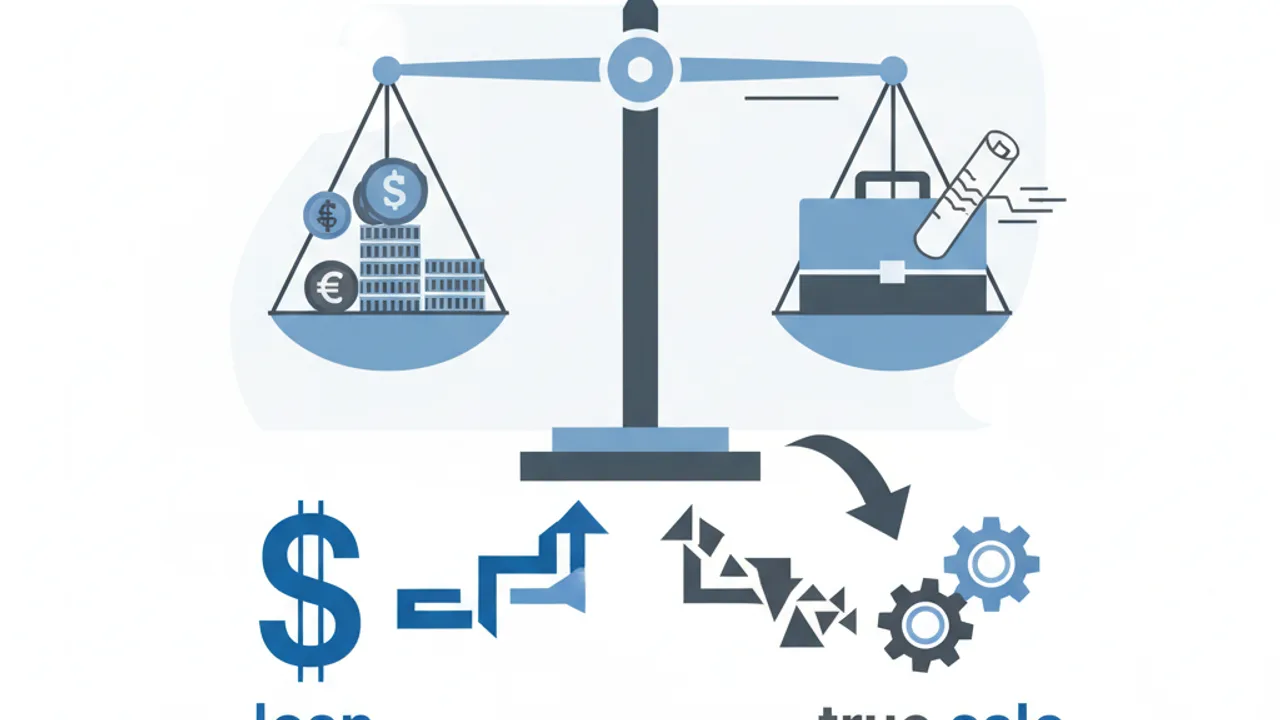
MCAs are not technically loans in most states, and that changes everything legally. Why the true-sale versus loan doctrine drives the strongest defenses in MCA cases.
Key Takeaways
- An MCA is not technically a loan in most states: it is structured as the purchase of future receivables at a discount, which keeps it outside usury law.
- That structure can be challenged: if a court recharacterizes the transaction as a disguised loan, state usury caps can apply and the contract may be void or reduced.
- The New York appellate line drives most of the doctrine through publicly reported decisions including Champion Auto Sales v. Pearl Beta Funding and the Davis v. Richmond Capital Group line of cases.
- The test is multi-factor: reconciliation rights, whether repayment is absolute or contingent, length of the relationship, recourse against the merchant in bankruptcy.
- States with the most developed doctrine and disclosure laws are NY, CA, FL, UT, and VA. An attorney unfamiliar with these frameworks misses the strongest defenses.
An MCA loan attorney is a lawyer who handles merchant cash advance matters, but the phrase contains a small legal trap. MCAs are not technically loans in most states. They are structured as the purchase of future receivables at a discount, which is why funders can quote factor rates instead of APRs and avoid state usury caps. That structure is not a formality; it drives the entire legal defense framework. An attorney who treats an MCA like a loan from the start misses the core question that courts actually ask: is this transaction what it says it is, a true sale of receivables, or is it a disguised loan subject to usury law? This guide covers the doctrine, why it matters for defense strategy, and what to look for in an attorney who understands the distinction. It is educational, not legal advice about your specific case.
The "True Sale vs Loan" Doctrine
The recharacterization doctrine in MCA cases asks a threshold question: does the economic substance of the transaction match the legal form? If the contract says "purchase of receivables" but the economics look like a fixed repayment loan, courts can look past the form and apply usury law.
The New York appellate division has done more work on this question than any other court system because so many MCA contracts include New York choice-of-law and forum selection clauses. The Champion Auto Sales v. Pearl Beta Funding decision and the Davis v. Richmond Capital Group line of related appellate decisions are the publicly reported touchstones. Each case turns on specific facts, but they converge on a multi-factor test.
Factor one: reconciliation rights. Does the contract give the merchant a meaningful right to request reconciliation when revenue drops? A true sale of receivables implies the funder's recovery is tied to what the merchant actually collects. A fixed daily payment regardless of actual receipts looks more like a loan. Contracts with robust reconciliation provisions, especially ones the funder has actually honored, lean toward true sale. Contracts with paper reconciliation rights that are impossible to invoke lean toward loan.
Factor two: absolute versus contingent repayment. Is the merchant obligated to pay the full face amount regardless of whether the receivables materialize? A true sale implies risk transfer: if the business's revenue disappears, the funder loses money too. An obligation to pay a fixed sum regardless of revenue looks like loan repayment, not sale proceeds.
Factor three: length of the relationship. True sales of future receivables, in other commercial contexts, are typically short-duration transactions tied to specific invoices or known receivables. An MCA that spans 12 to 24 months with open-ended future receivables, indefinite in amount, looks economically more like a loan than a traditional factoring arrangement.
Factor four: recourse in bankruptcy. What happens if the merchant files bankruptcy? If the MCA contract effectively gives the funder a claim against the merchant's general assets rather than a claim limited to specific receivables, that looks more like loan recourse than purchase of specific assets.
No single factor is dispositive. Courts weigh them in combination with the contract language and the parties' course of performance. Merchants and attorneys who build a strong factual record on each factor (documented reconciliation requests, revenue patterns, funder responses or non-responses) have the strongest position if the case escalates to a recharacterization argument.
Why This Matters for Your Defense
The recharacterization question is not abstract theory. If the court accepts the argument, the consequences for the funder are significant.
Usury caps become live. New York's civil usury rate is 16 percent per year, and the criminal usury rate is 25 percent per year under Penal Law 190.40. Most MCA effective rates, when annualized, exceed both thresholds substantially. A 1.35 factor rate on a 6-month MCA works out to an APR well above 100 percent. If the transaction is recharacterized as a loan in New York and the APR exceeds the criminal usury threshold, the contract may be void and the funder's claim extinguished.
State usury laws vary significantly. California, Florida, Utah, and Virginia have their own frameworks. Some states have civil-only usury caps (a defense to collection but not a void contract). Some have criminal usury provisions with more severe consequences. A few states have specific commercial lending exemptions that limit or eliminate usury claims. A competent MCA attorney knows which framework applies in which state.
Settlement leverage shifts. Even if a case never reaches a final ruling on recharacterization, the credible threat of a recharacterization finding changes the funder's settlement posture. A funder facing a 30 percent chance of losing the entire claim negotiates differently than a funder defending a routine breach of contract case.
State disclosure laws add another angle. New York's Commercial Finance Disclosure Law (Article 8 of the New York Financial Services Law), California's Commercial Financing Disclosure Law (SB 1235), Utah's Commercial Financing Registration and Disclosure Act, and Virginia's commercial financing law all require specific pre-contract disclosures. Failure to comply can provide independent defenses or claims. Florida's Commercial Financing Disclosure Law, passed as HB 601, adds another jurisdiction with live disclosure requirements.
Good faith and fair dealing. The implied covenant is strongest when tied to reconciliation failure. If the funder refused to reconcile despite documented hardship, that fact supports both a breach of covenant claim and the recharacterization argument. The sibling article on MCA defense attorneys covers how these defenses interact in litigation.
What to Look for in an Attorney Who Understands This
Any lawyer can claim familiarity with MCA law. The right lawyer can demonstrate it. A short list of what to look for.
Familiarity with the appellate cases. Ask the attorney to describe the multi-factor recharacterization test in their own words. If they reference Champion Auto Sales or the Davis v. Richmond Capital Group line of cases from memory, that is a strong signal. If they need to look it up, that is a weak signal. This is the single highest-leverage question in a consultation.
Comfort arguing recharacterization. Some attorneys know the doctrine but avoid arguing it because the outcome is uncertain and the cases are motion-heavy. An attorney who has actually pled recharacterization and defended motion practice on it is different from one who has only read about it. Ask for specifics.
Understanding of state disclosure laws. Ask about the commercial finance disclosure laws in the relevant states. New York, California, Utah, Virginia, and Florida all have them. A competent MCA attorney should be able to summarize the core obligations in each state and the consequences of non-compliance.
Experience with reconciliation arguments. Reconciliation failure is the factual building block for most recharacterization arguments. Ask how the attorney builds the factual record on reconciliation: what they ask the client to document, how they frame the funder's responses (or silence), how they present the record in motion practice.
Track record on dispositive motions. Recharacterization arguments often turn on motion practice rather than trial. An attorney who has successfully opposed motions for summary judgment brought by funders, or successfully moved for summary judgment themselves on recharacterization grounds, has a different profile than one who has only handled settlements.
Comfort with personal guarantee enforcement issues. MCA contracts typically include personal guarantees. The guarantor is often the principal of the borrowing business. Recharacterization arguments affect guarantor liability differently than they affect corporate liability. An attorney who has thought carefully about this interaction is better prepared than one who has not.
For understanding what this expertise typically costs, see the MCA lawyer cost guide. For context on the broader attorney engagement, see the MCA attorney complete guide.
States Where the Doctrine Matters Most
The recharacterization doctrine applies in most states, but the case law is most developed in a handful. If your contract has a choice-of-law clause pointing to one of these states, or if the funder files in one of them, the doctrine is likely live in your case.
New York. The headline jurisdiction. Most MCA contracts select New York law. The appellate division has produced the clearest framework through the Champion Auto Sales and Davis v. Richmond Capital Group decisions. New York supreme court commercial division handles most of the volume. New York's commercial finance disclosure law applies to transactions in the state and is increasingly the basis for independent regulatory and civil claims. Merchants should also review MCA laws in New York for the statutory backdrop.
California. California's usury framework is nuanced, with specific exemptions for commercial lenders. California's Commercial Financing Disclosure Law (SB 1235) imposes disclosure obligations on MCA providers. Recharacterization arguments in California tend to weave together the state usury framework, the commercial disclosure law, and the general contract law principles courts use to look past form to substance.
Florida. Florida has a civil usury cap and a criminal usury provision. Florida's Commercial Financing Disclosure Law (HB 601) adds disclosure obligations. Florida courts have been somewhat less developed on recharacterization than New York but the underlying principles apply.
Utah. Utah's Commercial Financing Registration and Disclosure Act took effect in 2023 and is among the more detailed state frameworks for commercial finance disclosure. Utah is also home to a concentration of MCA funders, which means Utah courts see meaningful case volume.
Virginia. Virginia passed a commercial financing disclosure law in recent years. The combination of Virginia's usury framework and the disclosure law creates multiple angles for defense.
Other states. Many states apply similar recharacterization principles through general contract and usury law even without MCA-specific statutes. The work is less turnkey because the attorney needs to build the argument from first principles rather than citing a developed case law line, but the underlying doctrine is generally available. For merchants in other states, the MCA lawsuit being sued playbook covers the general defense approach.
FAQ
Sources
- New York Penal Law 190.40 criminal usury— New York State Senate
- New York Commercial Finance Disclosure Law guidance— NY Department of Financial Services
- California SB 1235 Commercial Financing Disclosure Law— California Legislative Information
- New York Unified Court System— NY Courts public portal
- Cornell Legal Information Institute on usury— Cornell LII
Your next step
Lawsuits have deadlines. If you've been served, act in days not weeks. Here are the three paths, ordered by urgency for your situation.
- Talk to an MCA attorneyIf you've been served with a lawsuit or COJ, this is the first call. See what an MCA attorney does and what it costs.
- MCA debt relief companyIf no lawsuit has been filed yet, a debt relief company can often settle before litigation. Disclosure: /how-we-make-money.
- DIY negotiationWorks best before default. Full playbook here.