MCA Lawsuit Attorney: What to Expect When You've Been Served
What an MCA lawsuit attorney does from service to resolution: the first 30 days, discovery, settlement, and timelines. Real expectations, no guarantees.
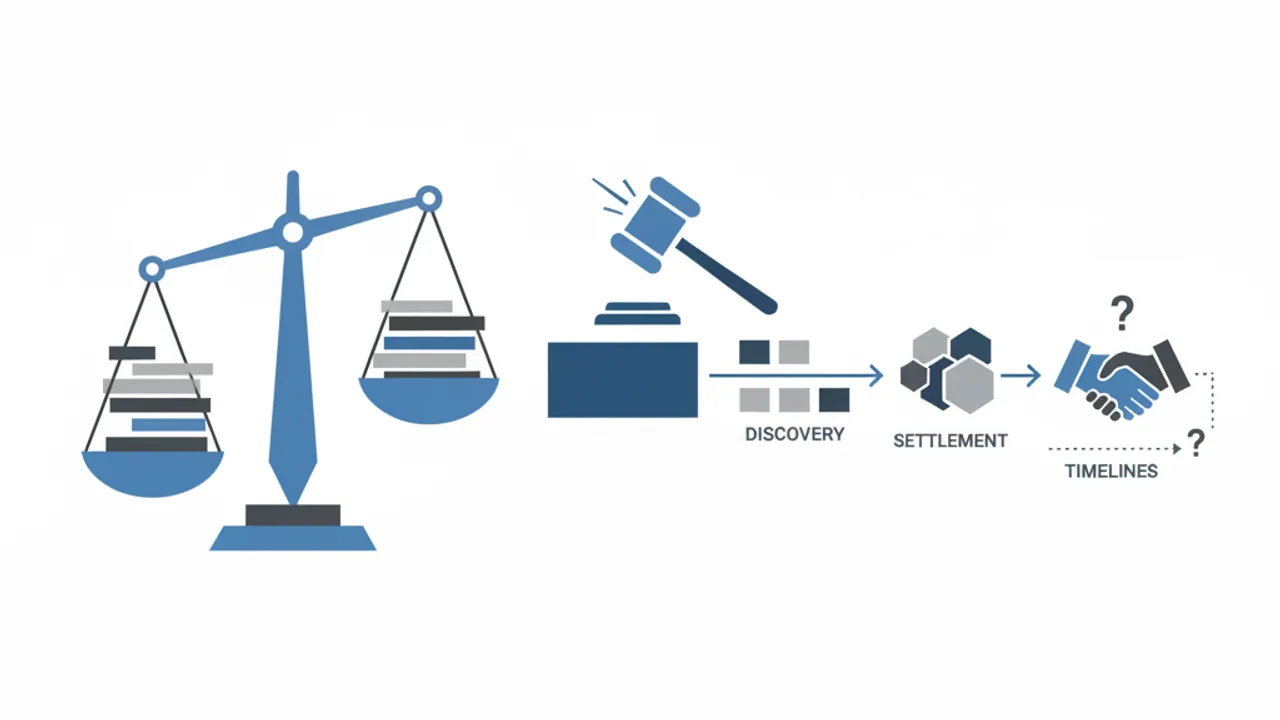
Key Takeaways
- The response deadline is the single most important fact in the first 30 days: New York gives 20 or 30 days depending on method of service, Florida gives 20 days, most states cluster in that range.
- Missing the deadline produces a default judgment, which is harder and more expensive to unwind than answering on time.
- Early motion practice can shape the case: motions to change venue, motions to dismiss on threshold grounds, emergency motions to release restrained funds.
- Discovery is where cases are won or lost on facts: the funder's internal reconciliation records and underwriting notes matter more than most merchants realize.
- Most contested cases settle before trial, often at 35 to 55 cents on the dollar, because litigation is expensive for the funder too.
- Typical timeline from complaint to resolution is 6 to 18 months, depending on court congestion and whether dispositive motions are fully briefed.
An MCA lawsuit attorney is the lawyer you hire after you have been served with a complaint by a merchant cash advance funder. The engagement is different from pre-signing contract review or pre-default settlement work because the clock is already running. State courts impose strict deadlines for responding to a complaint, and missing one produces a default judgment that is harder and more expensive to unwind than answering on time. This guide covers what to expect from the moment of service through the typical arc of the case: the first 30 days, what your attorney needs from you, early motion practice, discovery, and settlement negotiations. It is educational, not legal advice. Every case turns on its specific facts and jurisdiction, and the only sound guidance on your case is an attorney licensed in your jurisdiction reviewing the actual documents.
The First 30 Days After Being Served
The clock starts the moment you are served. Most merchants do not fully appreciate that the response window is as tight as it is.
Day 0 (service). You are handed the summons and complaint, or it is left with an authorized person at your business, or it is served through another method permitted by the jurisdiction. Save everything. The affidavit of service is a public filing and will be part of the case record.
Response deadline by state. New York gives 20 days if served personally within the state and 30 days if served outside the state or by substitute service, under CPLR 3012. Florida gives 20 days under Florida Rule of Civil Procedure 1.140. Most other states cluster in the 20 to 30 day range. A few allow 45 days. Federal court cases give 21 days to respond under Federal Rule of Civil Procedure 12. Confirm the exact deadline for your jurisdiction before anything else.
First week: hire counsel. The single most important action in the first seven days is retaining an attorney who can meet the deadline. Some attorneys can draft and file an answer in 48 hours if the facts are clean. Others need a week or two. Start the conversation immediately, even if you are still evaluating candidates. Several attorneys can review the complaint in a free consultation and give you a preliminary read.
Review the complaint and exhibits. The complaint will identify the funder, the contract, the face balance, and the amount demanded. Exhibits usually include the MCA agreement, the personal guarantee, the payment history, and correspondence. Read all of it carefully with your attorney. The complaint's specific allegations drive the defense strategy.
Calendar all deadlines. Beyond the response deadline, there may be a preliminary conference deadline, an initial disclosure deadline (in federal court), and deadlines for any motion the plaintiff files. A calendar with all deadlines is the first operational artifact of the case.
Decide: answer or motion to dismiss. The attorney's first strategic call. An answer with affirmative defenses preserves every argument. A pre-answer motion to dismiss can end the case early on threshold grounds but may waive some defenses if denied. The MCA defense attorney article covers the tradeoff in more detail.
Assess immediate risk. If a confession of judgment has been filed in addition to or instead of the lawsuit, there may already be a restraining notice on your bank accounts. The attorney's first emergency motion may be to release restrained funds so the business can operate while the case proceeds.
What Your Attorney Will Need From You
The faster you provide these, the faster and cheaper the case moves.
The complete MCA agreement. All pages, including the personal guarantee, the confession of judgment addendum if any, the addenda and modifications, and the full schedule of pulls. Funders sometimes include additional documents in their exhibits that the merchant does not have; ask the attorney to flag any discrepancies.
All correspondence with the funder. Emails, text messages, letters, and screenshots of any portal communications. The reconciliation request history is especially important. If you requested reconciliation and the funder refused, ignored, or made the process impossible, those communications are defense ammunition.
Bank statements. Typically the 12 to 24 months leading up to the dispute. The statements show the ACH pulls, the revenue trend, and any hardship indicators. Your attorney will use them to document the reconciliation argument and, if relevant, the recharacterization factual record.
Business tax returns. Usually the last two or three years. These corroborate revenue, show the business's financial posture over time, and help with settlement discussions if you reach that stage.
Any prior communications with other lawyers or debt relief firms. If you talked to a debt relief firm or another attorney before, your new counsel should know. Conflicts, prior privileged communications, and continuity matter.
Your narrative. A one-page written summary of what happened: when you took the MCA, why, what went wrong, what you tried to resolve it, and where you are today. This is not a legal document. It is a working document that helps the attorney understand the human story behind the contract.
Corporate documents. Articles of incorporation, operating agreement, EIN, and the identity of the personal guarantor. If multiple guarantors are named in the complaint, each guarantor's situation needs separate attention.
Insurance information. If the business carries management liability or errors and omissions insurance, check whether the policy covers MCA-related claims. Coverage is uncommon but occasionally exists, and it can significantly change the economics of the defense.
Early Motion Practice
The first three to six months of a contested MCA case often involve significant motion practice. The outcomes shape the rest of the litigation.
Motion to dismiss. Filed instead of an answer, typically within the response deadline. Grounds include failure to state a claim, lack of personal jurisdiction, improper venue, and statute of limitations. These motions are briefed over 30 to 60 days and decided in the weeks or months that follow. A granted motion ends the case or narrows it significantly. A denied motion signals the case will proceed to discovery.
Motion to change venue. MCA contracts often include forum selection clauses pointing to New York or another specific state. If the funder filed in the contractually specified forum, the venue argument is usually a loser. But if the funder filed somewhere else (because the contract allowed it or because the forum selection clause is defective), or if the merchant has a strong argument that enforcing the forum selection clause would be unreasonable, a motion to change venue can move the case closer to the merchant's home jurisdiction. These motions are briefed over 30 to 45 days.
Motion to vacate a confession of judgment. If a COJ was entered pre-suit (or post-suit, though that is less common), a separate motion to vacate is the tool. Grounds include procedural defects (improper notarization, lack of supporting affidavits), substantive unconscionability, or, for post-2019 New York COJs, the statutory ban on out-of-state COJs under the reform to CPLR 3218. The MCA confession of judgment article covers the mechanics in more detail.
Emergency motion to release restrained funds. If the funder obtained a restraining notice on the merchant's bank accounts, an emergency motion can seek release of funds for payroll, critical vendor payments, or ongoing operations. Courts generally balance the funder's secured position against the need to keep the business operating. These motions often result in partial releases or agreed-upon operating allowances pending the merits.
Motion for extension. If the attorney cannot meet the original response deadline for any reason, a stipulated or requested extension is routinely granted, especially if opposing counsel consents. Most plaintiffs' lawyers in MCA cases are open to short extensions because they benefit from orderly briefing.
Discovery Phase
Discovery is the longest phase of most MCA cases, typically running 3 to 10 months after the answer is filed. It is also where the factual record gets built that drives settlement or trial outcomes.
Document requests. Both sides serve requests for production. From the funder, you want the complete underwriting file, the internal reconciliation records, any internal communications about your specific account, and the reconciliation policies or playbooks. From the merchant, the funder will ask for bank statements, tax returns, corporate documents, and any communications with other lenders or funders.
Interrogatories. Written questions that must be answered under oath. These are typically limited in number (25 to 35 depending on the jurisdiction) and used to lock in specific facts.
Depositions. Sworn testimony taken outside court. In MCA cases, typical deponents include the merchant principal, the funder's account manager or reconciliation contact, and the funder's corporate representative on specific topics. Depositions are expensive (court reporter fees, attorney time) but are often the most valuable discovery tool because contemporaneous testimony locks in positions.
Expert testimony. In some MCA cases, expert witnesses on industry practice, factor rate calculation, or commercial finance custom are useful. Not every case needs experts, and they add meaningful cost.
Records subpoenas. For relevant third-party documents (bank records, payment processor records, other funders' files), subpoenas can obtain documents neither party has readily available.
Discovery disputes are common. Motion practice to compel production, protective orders, and spoliation allegations all happen. Managing discovery efficiently is a significant part of the attorney's value. For context on how discovery costs interact with total legal fees, see the MCA lawyer cost article.
Settlement Negotiations During Litigation
Most MCA cases settle before trial. Understanding when and how settlement typically happens helps merchants set realistic expectations.
Post-answer settlement. Once the answer is filed and affirmative defenses are on the record, the funder has seen the legal theory of the defense. Some cases settle at this stage, typically at 40 to 55 cents on the dollar, because the funder wants to avoid discovery costs and uncertainty.
Post-discovery settlement. After documents are produced and key depositions taken, both sides have a clearer view of the facts. Offers often sharpen at this stage. A merchant with a strong reconciliation paper trail and documented hardship may secure a settlement at 30 to 45 cents; a merchant with a weaker record may settle at 50 to 65 cents.
**Post-summary judgment motion. **If either side files a motion for summary judgment, the briefing lays out each side's strongest arguments in writing. Judges often deny these motions in MCA cases because the recharacterization question is fact-intensive, but the briefing process itself frequently triggers settlement. Parties get a better read on the judge's likely posture and adjust their expectations.
Trial-eve settlement. Cases sometimes settle in the weeks before trial when both sides confront the cost and uncertainty of a verdict. Settlement at this stage is less common than earlier settlements because the cumulative legal fees make smaller discounts less meaningful.
What to negotiate beyond the dollar amount. Releases of personal guarantees, releases of UCC liens, confidentiality provisions, and payment timing. The headline settlement number matters, but so do these terms. A settlement of 50 cents on the dollar with full release of personal guarantees and UCC liens is materially better than 40 cents with the guarantees still live.
For merchants who are unsure whether to fight or settle, the MCA attorney complete guide covers the decision framework. For merchants comparing attorney-led settlement to debt relief company settlement, the MCA debt settlement lawyer vs debt relief company article walks through when each path wins.
FAQ
Sources
- New York CPLR 3012 responsive pleadings— New York State Senate
- Federal Rules of Civil Procedure Rule 12— Cornell Legal Information Institute
- New York Unified Court System— NY Courts public portal
- PACER federal court records— U.S. Courts public access system
- U.S. Courts Bankruptcy Basics— U.S. Courts
Your next step
Lawsuits have deadlines. If you've been served, act in days not weeks. Here are the three paths, ordered by urgency for your situation.
- Talk to an MCA attorneyIf you've been served with a lawsuit or COJ, this is the first call. See what an MCA attorney does and what it costs.
- MCA debt relief companyIf no lawsuit has been filed yet, a debt relief company can often settle before litigation. Disclosure: /how-we-make-money.
- DIY negotiationWorks best before default. Full playbook here.