MCA Agreement Lawyer: What to Have Reviewed Before Signing
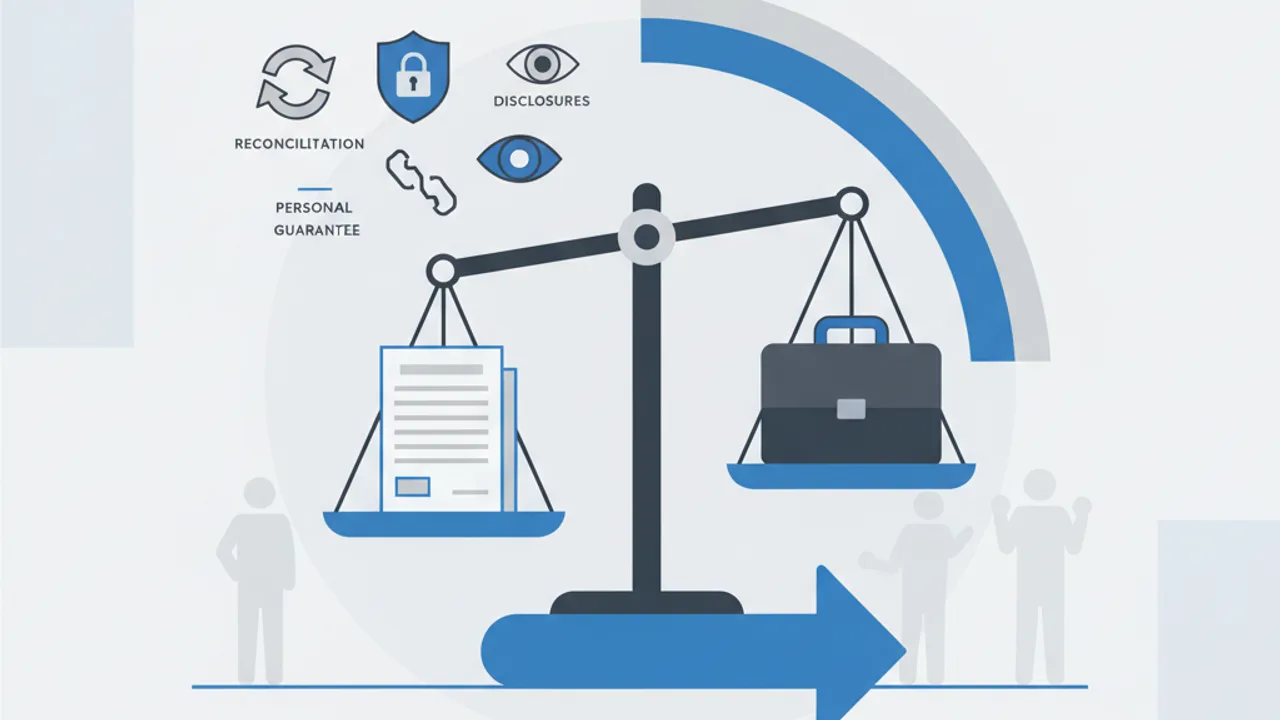
Pre-signing MCA contract review typically costs $500 to $2,000 and prevents catastrophe. What a lawyer looks for: reconciliation, personal guarantee, default triggers, disclosures.
Key Takeaways
- Pre-signing contract review typically costs $500 to $2,000 as a flat fee and takes a few days. For any MCA over $50,000, the math almost always favors review.
- Confession of judgment clauses are the single biggest red flag: New York banned them against out-of-state debtors in 2019 but they still appear in contracts from other states.
- The reconciliation clause is non-negotiable: every reputable MCA contract has one. If it is missing or heavily conditioned, walk.
- Personal guarantee language varies significantly in scope, carve-outs, and cross-guarantor liability. Review this line by line.
- Default triggers are sometimes absurd: some contracts define default to include events that are routine business activity. Read every trigger before signing.
- Disclosure laws in NY, CA, FL, UT, and VA require specific pre-contract disclosures. Missing or inaccurate disclosures can provide independent defenses later.
An MCA agreement lawyer is an attorney you hire to read a merchant cash advance contract before you sign it. The work is typically a flat fee of $500 to $2,000, takes a few business days, and produces a written summary of the legal and economic risks in the specific contract on your desk. For any advance over $50,000, the math almost always favors review. The cost of finding out after the fact that the contract has an enforceable confession of judgment clause, an unreconcilable payment obligation, or a personal guarantee that sweeps in your home is orders of magnitude higher than the cost of a two-hour review up front. This guide covers what a contract review actually looks for, the clauses that matter most, and why pre-signing legal analysis is the cheapest leverage a merchant can buy in MCA financing. It is educational, not legal advice on any specific contract.
Why Pre-Signing Review Is Worth $500 to $2,000
The MCA industry's economics work because most merchants sign without reading carefully and without counsel. Funders structure contracts with favorable terms knowing that most borrowers are either rushed, financially stressed, or simply unaware of what specific clauses mean operationally. A lawyer reads for a living and can flag issues that look fine on first reading but produce catastrophes in practice.
The asymmetric cost. A contract review is $500 to $2,000 regardless of advance size. A post-default defense against a lawsuit is $10,000 to $40,000. A motion to vacate a wrongly entered confession of judgment is $3,000 to $8,000. A personal guarantee enforcement action against your home is six figures. Any of these can be prevented or materially mitigated by catching a bad clause before it is signed.
Negotiation leverage. Once the contract is signed, everything is settled law between the parties. Before signing, many clauses are negotiable. Funders compete for merchants, and a merchant with legal representation often secures better terms simply because the funder knows pushback is coming on problematic provisions. Personal guarantee carve-outs, default trigger revisions, and reconciliation clause clarifications are all commonly negotiated at this stage.
State law varies. What is enforceable in New York, California, Florida, Utah, and Virginia is not identical. A lawyer familiar with the applicable state's commercial finance disclosure law and usury framework can flag specific problems that a layperson or even a general business attorney might miss. For the broader legal framework, see the MCA loan attorney article on the true-sale versus loan doctrine.
What you get in writing. A reputable contract review produces a written memo or summary: here are the economic terms in plain English, here are the specific clauses that create risk, here are the clauses that should be negotiated, here are the red flags that might mean not signing at all. This memo is a working document for the merchant, the funder, and any future counsel if issues arise.
Confession of Judgment Clauses
Confession of judgment clauses are the single most dangerous provision in legacy MCA contracts. A COJ allows the funder to obtain a court judgment against the merchant without notice, without a trial, and without any opportunity to defend. The funder simply files the COJ paperwork with a court clerk, and a judgment is entered. From there, enforcement starts immediately.
New York's 2019 reform. Senate Bill S6395, effective in 2019, amended CPLR 3218 to prohibit confessions of judgment in New York against debtors who are not New York residents. The reform was a direct response to a documented pattern of MCA funders using New York COJs aggressively against out-of-state merchants. Post-2019 New York COJs against out-of-state debtors are not valid.
Other states still allow them. The New York reform did not reach other states. Several states still allow confessions of judgment in commercial transactions, including states where MCA funders have shifted their litigation practice. Merchants outside New York should assume a COJ clause is enforceable unless counsel confirms otherwise.
What the clause looks like. COJ clauses typically appear as a separate addendum to the main MCA agreement, titled "Affidavit of Confession of Judgment" or similar. They require the merchant (and sometimes the personal guarantor) to sign and notarize a statement confessing to a judgment in a specified amount upon default. The signature is usually notarized at contract signing.
What to do if you see one. The strongest option is to refuse the MCA entirely. If that is not realistic, counsel can sometimes negotiate removal of the COJ clause. If the funder refuses to remove it, counsel can negotiate limitations on when it is triggered, what amount is confessed, and which state's courts it is filed in. These changes reduce the risk without eliminating it. For deeper coverage of how COJs work and how to respond if one has been filed, see MCA confession of judgment and MCA laws in New York.
Personal Guarantee Provisions
Almost every MCA contract includes a personal guarantee. This means the principal of the business personally guarantees the obligation, making personal assets (home, car, bank accounts) reachable if the business defaults. The personal guarantee is the funder's insurance policy against business failure.
Scope of the guarantee. Personal guarantees vary significantly in scope. Some are "limited guarantees" tied to specific breach events (fraud, misrepresentation, unauthorized asset transfers). Others are "unlimited guarantees" covering the full face amount regardless of cause. Most MCA contracts default to unlimited, but limited guarantees are sometimes negotiable.
Carve-outs. Key carve-outs to negotiate: (1) no personal liability for the principal amount unless the business has committed fraud or an intentional breach; (2) no liability if the merchant's business files bankruptcy in good faith; (3) no enforcement against primary residence or retirement accounts; (4) cap on total personal liability.
Cross-guarantees and co-guarantors. If multiple principals are signing, the guarantee may be joint and several (each guarantor is fully liable for the whole) or several only (each guarantor is liable only for their share). Joint and several is the default. Several only is often negotiable and can dramatically reduce an individual guarantor's exposure.
Spousal guarantees. Some contracts require a spouse's signature, even when the spouse has no role in the business. This is often legally unenforceable (federal Equal Credit Opportunity Act limits compelled spousal signatures on commercial guarantees) but funders still ask. A lawyer can advise on when and how to push back.
Reading every reference. The personal guarantee is sometimes a separate document, sometimes embedded in the main contract, sometimes both. A lawyer reads all of them together to catch inconsistencies and trap clauses.
Reconciliation Rights
The reconciliation clause is the single most important provision in an MCA contract. A reputable MCA contract has a reconciliation clause that gives the merchant a right to request adjustment of the daily or weekly pull when revenue drops. The clause is what supports the legal characterization of the MCA as a true sale of receivables rather than a disguised loan.
What a good reconciliation clause looks like. The clause specifies: (1) the percentage of actual receipts the funder is entitled to collect; (2) the circumstances that trigger a reconciliation right (revenue drop of a specified magnitude); (3) the documentation required to support a reconciliation request (typically bank statements showing the revenue drop); (4) the timeline for the funder to respond; (5) the mechanism for adjusting the pull downward.
What a bad reconciliation clause looks like. Clauses that are present on paper but impossible to invoke in practice: documentation requirements that no merchant can satisfy, approval processes with no timeline, funder discretion with no standard, or conditions precedent that effectively waive the right.
Walk if the clause is missing. A contract with no reconciliation right at all is a red flag that should usually prompt walking away. Without reconciliation, the contract is economically and legally indistinguishable from a fixed-payment loan, which triggers recharacterization risk and suggests the funder is using an old template that has not kept pace with current case law.
Document reconciliation requests later. If the merchant later needs to invoke reconciliation, the paper trail matters. A lawyer at the signing stage can flag how to preserve a clean reconciliation record. The MCA defense attorney article covers how reconciliation arguments play out in litigation.
Default Triggers
The default triggers in an MCA contract determine when the funder can declare the merchant in default, accelerate the balance, enforce the personal guarantee, and start collection. Some triggers are reasonable. Others are absurd.
Reasonable triggers. Failure to make scheduled payments, intentional misrepresentation of revenue, unauthorized changes to bank accounts, sale of the business without consent. These map to actual harms to the funder.
Absurd triggers. Some contracts define default to include events that are routine business activity: opening a new business bank account, taking a small equipment loan, hiring a new employee in certain categories, moving business locations. A broad default clause can allow the funder to declare default on a merchant who is current on payments, using a technical breach as leverage.
Material adverse change clauses. These give the funder unilateral discretion to declare default if it subjectively determines that the merchant's condition has deteriorated. MAC clauses are extraordinarily broad and should be negotiated out or sharply limited.
Cross-default clauses. If the merchant has other debts (SBA loans, equipment financing, other MCAs), a cross-default clause lets the funder call default on the MCA if the merchant defaults on the other debt. This creates cascading default risk across the merchant's entire debt stack.
What to negotiate. Ideally, default is limited to non-payment and intentional fraud. Everything else should be negotiated out or tightly constrained. A funder unwilling to limit default to these categories is signaling that they expect to use the broader triggers.
Factor Rate and Fee Disclosures
State commercial finance disclosure laws require MCA funders to disclose specific economic terms before a contract is signed. These laws are relatively new and vary by state.
New York. The state's Commercial Finance Disclosure Law requires disclosure of the total amount to be paid, the finance charge, the payment amount and schedule, the total cost expressed as a percentage of the amount provided, and other standardized disclosures. Implementation guidance from NY DFS covers the specifics.
California. California's SB 1235 requires disclosures for commercial financing transactions in the state including MCAs. Disclosures include the funding amount, finance charge, payment amount, and APR equivalents.
Florida. Florida's Commercial Financing Disclosure Law (HB 601) imposes disclosure requirements on commercial finance transactions, including MCAs provided to Florida merchants.
Utah. Utah's Commercial Financing Registration and Disclosure Act took effect in 2023 and requires providers to register with the state and make specific disclosures.
Virginia. Virginia's commercial financing disclosure law adds another state with pre-contract disclosure requirements.
Why this matters for review. A contract that fails to include required disclosures, or includes disclosures that are materially inaccurate, may violate the state disclosure law. Violations can provide independent defenses or claims if the case later escalates. A lawyer reviewing the contract should confirm that the required disclosures are present, accurate, and consistent with the contract's other terms. The MCA laws in New York article covers the New York-specific framework.
FAQ
Sources
- New York Senate Bill S6395 confession of judgment reform— New York State Senate
- California SB 1235 Commercial Financing Disclosure Law— California Legislative Information
- NY DFS Commercial Finance Disclosure Law guidance— NY Department of Financial Services
- CFPB Small Business Lending— Consumer Financial Protection Bureau
- American Bar Association— ABA
Your next step
Lawsuits have deadlines. If you've been served, act in days not weeks. Here are the three paths, ordered by urgency for your situation.
- Talk to an MCA attorneyIf you've been served with a lawsuit or COJ, this is the first call. See what an MCA attorney does and what it costs.
- MCA debt relief companyIf no lawsuit has been filed yet, a debt relief company can often settle before litigation. Disclosure: /how-we-make-money.
- DIY negotiationWorks best before default. Full playbook here.