MCA Default 2026: Exactly What Happens Next
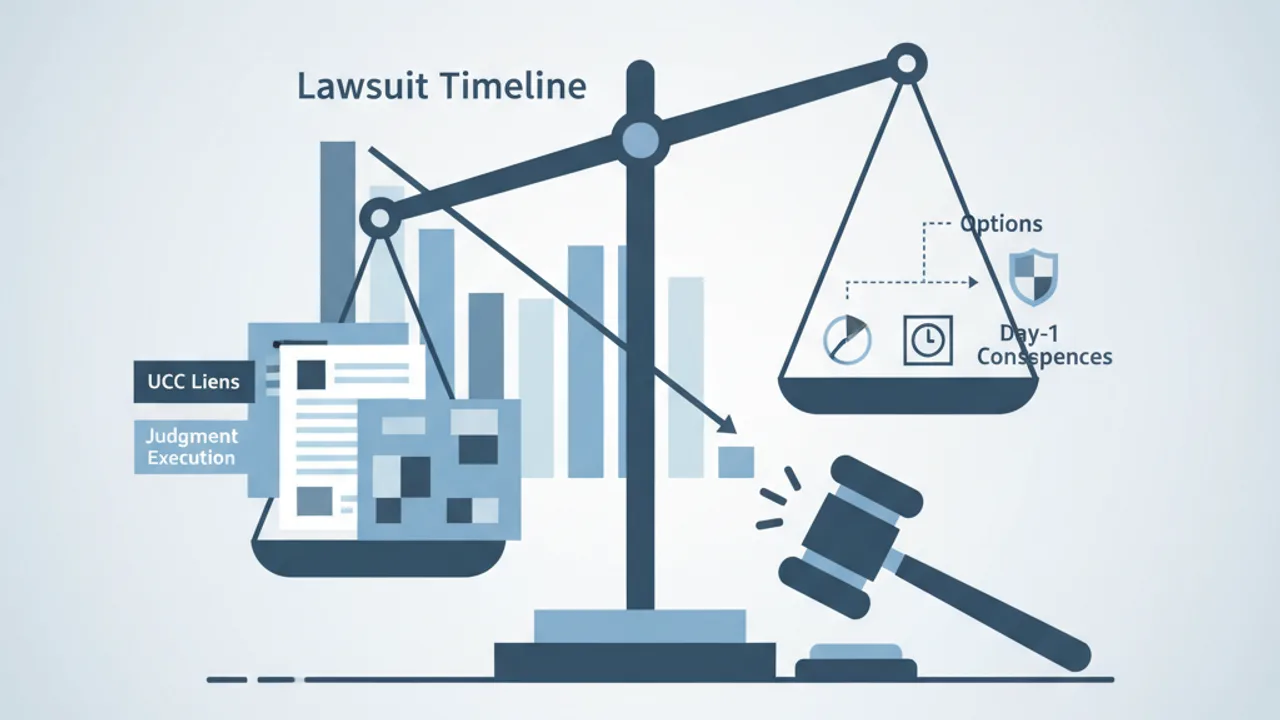
Day by day after MCA default: collection calls, UCC liens, lawsuits, judgment execution. The full timeline and options available at each stage.
Key Takeaways
- Default triggers an acceleration clause in most MCA agreements, making the full remaining balance immediately due and collectible.
- The funder's response timeline moves fast: demand letters typically arrive within 7 days and litigation preparation can begin within 30.
- A UCC-1 lien filed at origination becomes the funder's enforcement tool after default, allowing them to redirect receivables and block new financing.
- The window for negotiation is widest between days 1 and 30. After a lawsuit is filed, your options narrow and costs increase substantially.
- Confess-of-judgment clauses (where enforceable) can result in a judgment being entered before you are even notified.
- There are meaningful options at every stage, including negotiated settlements, restructuring, and litigation defense, but timing determines which options remain available.
Missing a daily or weekly ACH remittance on an MCA is not like missing a payment on a business credit card. Credit cards give you a grace period, a late fee, and a 30-day window before anything serious happens. MCA agreements are different. Most contain acceleration clauses that treat a single missed remittance, or a pattern of returned ACH transactions, as a triggering event that makes the entire remaining balance immediately due.
If you have defaulted on an MCA, or believe you are about to, the most important thing you can do right now is understand the timeline you are actually on. This guide walks through what happens at each stage and what options remain open at each point.
Day 1 to 7: Acceleration and First Contact
Default is usually triggered by one of a few events: a returned ACH due to insufficient funds, a blocked ACH from your bank, a missed remittance after an ACH freeze request, or in some cases, the funder's determination that your business revenues have dropped significantly below the level stated at origination.
Within 24 to 72 hours of a returned transaction, most funders initiate the following:
Account review and balance calculation. The funder calculates the total remaining receivable balance, which under the MCA structure is the amount you agreed to repay, not a principal-and-interest calculation. Because most MCA agreements include an acceleration clause, that full remaining balance is now due immediately.
ACH retry or account freeze. The funder may retry the ACH one or more times before declaring formal default. If you have multiple bank accounts and the funder has access to more than one, they may sweep available funds from any account on file.
Initial phone contact. The collections team, or an internal recovery desk, will call your business number. This call is typically informal but purposeful. The representative will confirm the account is delinquent and will usually offer a reinstatement option, which often involves paying the missed remittances plus a reinstatement fee.
Review your agreement now. Locate the operative MCA agreement and read the default provisions carefully. Confirm what constitutes a default event, what the cure period is (if any), and whether the agreement contains a confess-of-judgment clause or a specific arbitration requirement.
Your best option in this window is to assess whether the default is recoverable. If it was caused by a temporary cash flow issue and you have revenue coming in, a reinstatement or modified payment schedule may be negotiable. If the business genuinely cannot sustain the remittance level, that conversation needs to happen now, not after a lawsuit is filed.
Days 8 to 30: Demand Letters and Escalating Pressure
If the account is not reinstated within the first week, the process escalates in a structured way.
Formal demand letter. Most funders send a written demand letter within 7 to 14 days of first missed payment. The letter states the outstanding balance, cites the acceleration clause, and demands payment of the full amount by a specified date. It may also reference the UCC-1 security interest and the funder's right to enforce it.
Attorney referral. Many funders route delinquent accounts to their collection attorneys early, sometimes as soon as the first formal demand letter. An attorney letter is not the same as a lawsuit, but it signals that litigation preparation is underway.
Increased call frequency. Collection calls typically increase in frequency and may involve calls to your cell number, business location, and any secondary contacts on the application. There is no federal commercial law limiting call frequency.
Notification to co-applicants and guarantors. If another person signed your MCA agreement as a co-applicant or guarantor, they will begin receiving collection communications as well. Personal guarantors are jointly and severally liable in most agreements, meaning the full balance can be pursued against them personally regardless of what happens to the business entity.
Your options in this window are still meaningful. Negotiated settlements, restructuring into a modified payment plan, and hardship forbearance agreements are all more achievable before litigation begins. See Best MCA Debt Relief Companies if you want professional help managing negotiations at this stage. The MCA Debt Relief 2026 Guide outlines every resolution path in detail.
Days 30 to 90: UCC Lien Enforcement and Lawsuit Preparation
If no resolution is reached in the first month, the funder typically shifts from demand communications to enforcement preparation.
UCC-1 enforcement. The UCC-1 financing statement filed at origination was a placeholder for this moment. After default, the funder can send a notice to your account debtors (customers who owe you money) directing them to redirect payment to the funder rather than to you. This is called notification to account debtors under UCC Article 9. It is highly disruptive because it intercepts your incoming revenue before it reaches your account.
Bank sweeps. If the funder has a sweep agreement or access to your merchant processing account, they may initiate sweeps of available balances.
Litigation preparation. The funder's attorneys are preparing a complaint. They will pull your business entity records, your UCC filings, any prior judgments, and your state court records. This information shapes how aggressively they pursue litigation and whether they expect to collect a judgment.
Credit reporting. Most funders report defaults to commercial credit bureaus including Dun and Bradstreet. A default notation will begin appearing in business credit searches and will affect your ability to obtain future financing.
If you have not engaged counsel by this point, do so now. Once a lawsuit is filed, your response window is typically 20 to 30 days. Missing that window results in a default judgment, which is far more difficult and expensive to undo than any pre-litigation settlement.
Days 90 and Beyond: Litigation, Judgment, and Execution
Past the 90-day mark without resolution, litigation is the likely outcome.
Lawsuit filing. The complaint is typically filed in state court in the funder's home state (often New York) or in your home state, depending on the venue clause in your agreement. Some agreements contain mandatory venue clauses that require litigation in a specific jurisdiction even if it is inconvenient for you.
Service of process. You will be served through the registered agent of your business entity, through personal service, or by other state-approved methods. The clock starts when service is completed.
Confess-of-judgment risk. If your agreement contained a confess-of-judgment clause and you signed it for a New York court, the funder may have already had a judgment entered against you before you were served. New York restricted the use of COJs against out-of-state defendants in 2019, but agreements signed before that change may still be enforceable in some circumstances. Check your agreement and check the New York court records system for your name.
Default judgment. If you do not respond to the complaint within the specified period, the funder files for a default judgment. A default judgment is entered without any hearing and without your input. It is a judgment in the full amount claimed plus interest and attorneys' fees.
Post-judgment execution. After a judgment is entered, the funder can garnish business bank accounts, file judgment liens against real property, execute on personal property, and in some states pursue post-judgment discovery requiring you to disclose all assets. This phase can be extremely disruptive to ongoing business operations.
For a detailed playbook on responding to an active lawsuit, see What to Do When You Are Being Sued by an MCA Funder. If a UCC lien has already been filed and you need to address it specifically, MCA UCC Lien Removal covers the removal process in detail.
Your Options at Each Stage and How They Change Over Time
The options available to you are not fixed. They narrow as the timeline progresses.
Days 1 to 30: Maximum leverage for negotiation. Reinstatement with fee waiver, modified repayment schedules, hardship forbearance, and lump-sum settlement offers are all negotiable before litigation. Funders prefer resolution over litigation cost. A settlement offer of 50 to 70 cents on the dollar is often considered in this window.
Days 30 to 90: Structured settlement or debt relief engagement. Pre-litigation settlements remain possible and are cheaper than litigation defense. Engaging a MCA debt relief company or commercial attorney to negotiate on your behalf is advisable. Settlement range typically narrows to 60 to 80 cents on the dollar unless the funder has significant documentation problems.
Days 90 to judgment: Litigation defense with settlement track. Once suit is filed, you are defending and negotiating simultaneously. Litigation defense costs are real but sometimes necessary. Cases settle between filing and trial most of the time. Having a capable commercial defense attorney is essential.
Post-judgment: Limited but not zero options. After a judgment is entered, options include motion to vacate (for procedural defects, improper service, or COJ enforcement issues), appeal, structured satisfaction agreements, and in extreme cases, bankruptcy restructuring. Post-judgment settlement is possible but typically at less favorable terms than pre-litigation.
The consistent message: move early. The cost and effort required to resolve an MCA default increases at each stage, and the options available decrease. Consult the MCA Attorney Complete Guide to understand when professional legal representation is essential versus optional.
Sources
- UCC Article 9 — Default and Enforcement Rights— Cornell Legal Information Institute
- FTC — Commercial Lending and Business Debt Overview— Federal Trade Commission
- SBA — Understanding Business Financing Obligations— U.S. Small Business Administration
- CFPB — Small Business Lending Oversight— Consumer Financial Protection Bureau
Your next step
Collection calls and default are scary. Free options exist. Start with those before paying anyone.