MCA Debt Relief Company vs DIY Settlement: Which Saves More?
When you can settle MCA debt yourself vs when hiring a debt relief company pays. Real break-even math, pros, cons, and a decision table.
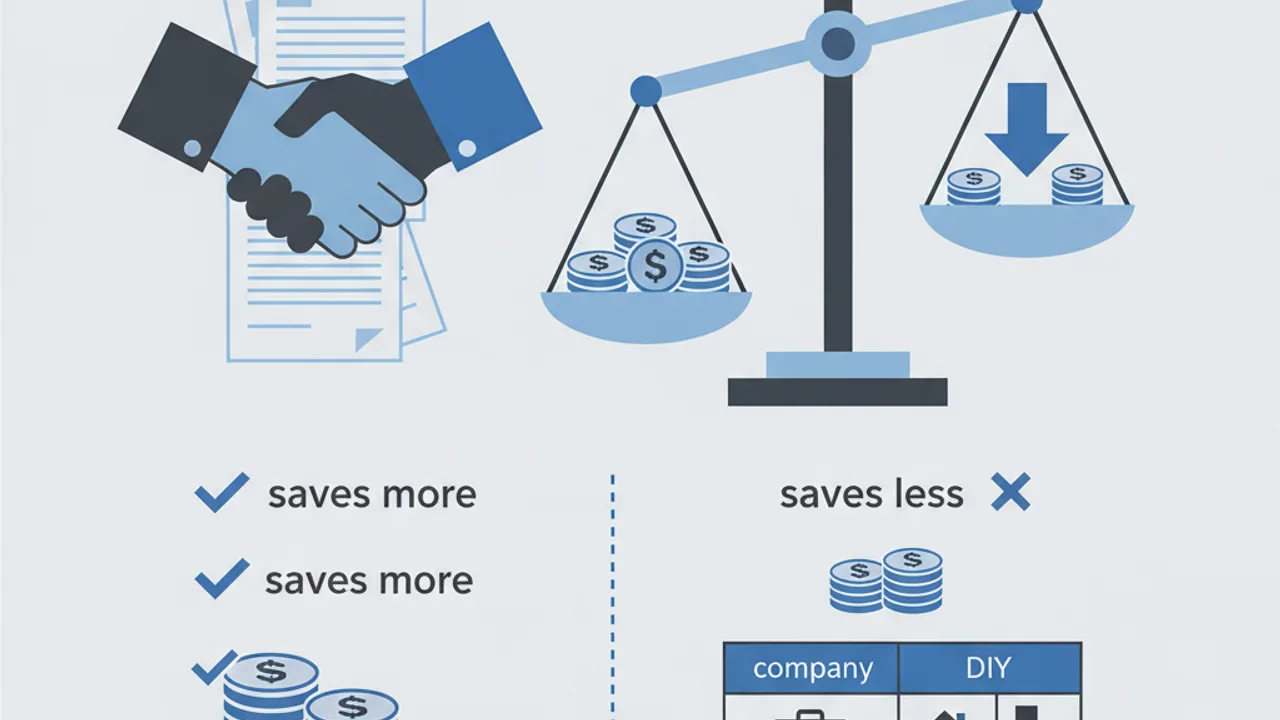
Key Takeaways
- DIY settlement is the cheapest path on paper: zero fees, but costs 20 to 60 hours of owner time spread across 4 to 8 weeks of phone work.
- A debt relief company earns its fee when complexity, scale, or emotional load make DIY unrealistic: multiple stacked MCAs, balances over $100,000, active default, or owner overwhelm.
- The break-even math is roughly balance-driven: under $75,000 single MCA, DIY almost always wins. Over $150,000 across multiple funders, a firm often wins. Between is judgment.
- Neither path stops a lawsuit: if you have been served, you need an attorney, not a relief firm or a DIY script. See the lawsuit playbook.
- The single worst path is indecision: while you deliberate, daily ACH pulls continue and default risk compounds. Pick a path within 2 weeks of reading this.
MCA debt relief company vs DIY settlement is the single most common decision owners face once they have accepted that the current payment plan is unsustainable. The honest answer is that DIY saves more money for straightforward cases and a debt relief firm saves more stress and time for complex ones. The break-even point depends on how many MCAs you have, how much you owe, whether you are in default, and how comfortable you are on the phone with funder workout desks. This guide lays out the head-to-head comparison, the scenarios where each path wins, and the actual break-even math worked through with numbers.
The Head-to-Head Comparison
| Dimension | DIY settlement | MCA debt relief company | |---|---|---| | Out-of-pocket cost | $0 to a few hundred in postage and time tracking | 15 to 25 percent of enrolled debt or 25 to 40 percent of savings | | Total time to resolution | 4 to 8 weeks if responsive | 3 to 9 months for full program | | Owner time investment | 20 to 60 hours across 4 to 8 weeks | 5 to 15 hours across 3 to 9 months | | Success rate (single MCA) | 60 to 80 percent settlement rate with good hardship doc | 70 to 85 percent among cases firms take | | Credit impact | Commercial, not consumer; UCC lien stays until payoff | Same commercial impact; fees do not affect credit | | Legal risk during process | Same as baseline, you control the pacing | Typically requires stopping direct payments, which accelerates default and lawsuit risk | | Emotional difficulty | High, you are on the calls | Lower, a negotiator is between you and the funder | | Scale of debt handled well | Single or dual MCA under $100,000 | Multi-MCA stacks, $100,000 to $1M plus |
The table is a compression. The reality for any specific owner is messier, so the next few sections walk through the scenarios where each path is a clear fit.
When DIY Works
DIY settlement wins on net outcome in a specific set of circumstances. If your situation fits the profile, the math rarely favors paying a firm.
Single MCA, balance under $75,000. A firm's fee on a $50,000 balance runs $7,500 to $12,500 at typical rates. That is a substantial fraction of the total savings you might achieve. Running the negotiation yourself keeps that fraction in your pocket. Funders with balances under $75,000 generally have standardized workout processes that do not require an intermediary.
Not yet in default. Pre-default, your leverage is weaker but your legal exposure is also lower. Most firms advise stopping direct payments to build escrow and create leverage. That advice works, but it also triggers the default cascade: UCC enforcement, possible litigation, frozen accounts. If you are still current, you can negotiate from a less hostile posture by offering a discounted payoff while still paying down the balance. That conversation is cleaner DIY than through a firm that has one standard playbook.
Owner has the time and temperament. Expect 20 to 60 hours of phone work across 4 to 8 weeks. You need to gather hardship documentation (bank statements, P&L showing the revenue drop, projections, customer explanation letters), draft a short hardship narrative, call the funder's workout desk, exchange written offers and counteroffers, and review the settlement agreement before signing. Owners who can stomach uncomfortable phone calls save the most. Owners who freeze up on collection calls do not, regardless of how good the deal could be.
Strong written record ready to share. Funders discount most for borrowers who can document a real hardship: a lost anchor customer, a building fire, a medical emergency, a vertical-specific downturn. If your records are organized and the story is clear, a 10-minute call can produce a real offer. If your records are scattered and the narrative is "things got tight," DIY is harder.
The full DIY playbook is in our how to negotiate MCA settlement guide. For the broader set of seven paths out of MCA debt, see the MCA debt relief 2026 complete guide.
When a Debt Relief Company Earns Its Fee
Some scenarios make DIY genuinely unrealistic. In those cases, a firm's fee is money well spent on net outcome or on the owner's ability to stay operational during the engagement.
Multiple stacked MCAs, especially 3 or more. Coordinating settlements across multiple funders is operationally complex. Each funder has its own workout process, each file has its own timeline, and the funders often know about each other through UCC filings and will adjust their offers based on what they see happening with their peers. A firm that has negotiated with all of them before has playbook context you cannot replicate in an afternoon.
Balance over $100,000 and especially over $250,000. At higher balances, absolute savings get bigger faster than the firm's percentage fee. On a $300,000 enrolled balance settled at 50 percent, savings are $150,000. A 30 percent-of-savings fee is $45,000. That is real money, but it is materially less than the time you would spend and the probability-weighted outcome difference between professional and DIY negotiation at that scale.
Already in default or sued. Once payments have stopped, the funder posture changes from workout to collection. The collection posture is harder to navigate than workout. Firms that do this full time know which funders escalate quickly to lawsuit and which hold off. They also know the reconciliation phone numbers that answer versus the ones that route to collection. If you have been served with an actual lawsuit, neither a relief firm nor a DIY script is enough. You need an MCA attorney. See the MCA lawsuit playbook for the 72-hour response window and the MCA attorney complete guide for when attorney involvement is essential.
Owner is overwhelmed. Some owners can do the phone work. Some cannot. If you find yourself unable to return funder calls, unable to open the mail, or frozen in the decision, a firm's value is not just negotiating skill but removing you from the daily emotional load so you can keep the business running. That is not a soft benefit. Businesses that fail during MCA crises usually fail not because the debt was unsurmountable but because the owner stopped operating effectively under the stress.
The Break-Even Math: A Worked Example
Here is how to run the numbers for your own situation. Assume you have $100,000 in MCA debt across two funders. You expect to settle at 40 percent, so the total settlement would be $40,000, a savings of $60,000 from the face balance.
DIY path. Cost: $0 in fees. You spend 40 hours over 6 weeks on the phone. At an owner's effective hourly value of $75 (call it what your time is worth to the business), that is $3,000 of time. Net cost: $40,000 settlement plus $3,000 time = $43,000. Savings vs. paying the face balance: $57,000.
Debt relief firm, percentage of savings at 30 percent. Cost: 30 percent of $60,000 in documented savings = $18,000 in fees, plus the $40,000 settlement. Your time: 10 hours over 6 months. At $75 per hour, $750 of time. Net cost: $40,000 + $18,000 + $750 = $58,750. Savings vs. paying face balance: $41,250.
Debt relief firm, percentage of enrolled debt at 20 percent. Cost: 20 percent of $100,000 = $20,000 in fees, plus the $40,000 settlement. Your time: 10 hours. Net cost: $40,000 + $20,000 + $750 = $60,750. Savings vs. paying face balance: $39,250.
DIY nets $15,000 to $17,000 more than either firm model on this scenario. The calculus shifts if: you are not able to achieve a 40 percent settlement DIY (professional negotiators sometimes land 5 to 15 points tighter), the case runs past 60 hours of owner time, or the firm's fee is at the lower end of the range. If you expect DIY to yield a 50 percent settlement but a firm would achieve 40 percent, the firm wins by $10,000 at the savings-based fee. Run your specific numbers through our MCA debt relief cost calculator to see the full breakeven.
A sanity check on the "professional negotiators get better discounts" assumption: it is true on average but not by as much as firm marketing implies. Most of the discount range is set by funder policy and portfolio pressure, not by negotiator skill. Strong hardship documentation and credible follow-through close 70 to 80 percent of the gap. A professional negotiator closes more of the remainder, but the marginal improvement is often 5 to 10 percentage points, not 20.
How to Start DIY Today
If after running the numbers DIY looks like the right fit, here is the fastest way to start.
Today. Pull your MCA contracts. List every funder, balance, daily or weekly payment amount, and projected payoff date. Pull 90 days of bank statements and your most recent P&L. Draft a one-page hardship narrative: what happened to the business, when, and what the revenue and cash flow impact looks like. Keep it factual and numeric.
This week. Call each funder's reconciliation or workout line (not the sales or collections line, workout is a different desk). Ask for the workout or merchant services group. Explain the hardship, ask about options. Some funders will propose holdback reduction first. Others will go straight to discounted payoff. Ask for any offer in writing and do not accept a verbal commitment.
Next 2 to 4 weeks. Exchange written offers and counteroffers. Typical starting range from the funder is 65 to 80 cents on the dollar. Typical closing range is 40 to 60 cents depending on the hardship and funder. Ask for the settlement agreement in full before signing and confirm the language includes a full satisfaction of the balance, release of UCC liens, and written payoff letter.
The full step-by-step script, hardship letter template, and settlement agreement review points are in how to negotiate MCA settlement. For the broader question of whether to settle or explore another path entirely, the pillar is the MCA debt relief 2026 complete guide. For public-facts profiles of debt relief firms if DIY is not right for your situation, see best MCA debt relief companies in 2026 and the how to choose an MCA debt relief company question framework.
If your situation involves an active lawsuit, confession of judgment exposure, or a contract that may be legally defective, neither DIY nor a non-attorney relief firm is the right tool. Start with the MCA attorney complete guide and the MCA lawsuit playbook. For owners whose business fundamentals are still healthy, the SBA 7(a) loan program is often a better long-term move than settling and rebuilding from scratch.
Sources
- CFPB on debt settlement— Consumer Financial Protection Bureau
- FTC guidance on debt relief services— FTC Consumer Advice
- SBA 7(a) Loan Program— U.S. Small Business Administration
- Federal Reserve Small Business Credit Survey— Federal Reserve
Your next step
If you're dealing with MCA debt, these are the three paths that actually work. Start with the cheapest option that fits your situation.
- DIY negotiationFree and the most common starting point. Use our negotiation playbook first.
- MCA debt relief companyPaid service that handles negotiation for you. See our side-by-side comparison. Our disclosure: we work with Coastal Debt Resolve, details on /how-we-make-money.
- MCA attorneyNeeded when lawsuits are filed or contracts are legally defective. See the attorney guide.