MCA Debt Collector Guide: Your Rights and Their Limits (2026)
What an MCA debt collector can and cannot legally do. Covers FDCPA scope limits, state commercial collection laws, documentation rights, and response tactics.
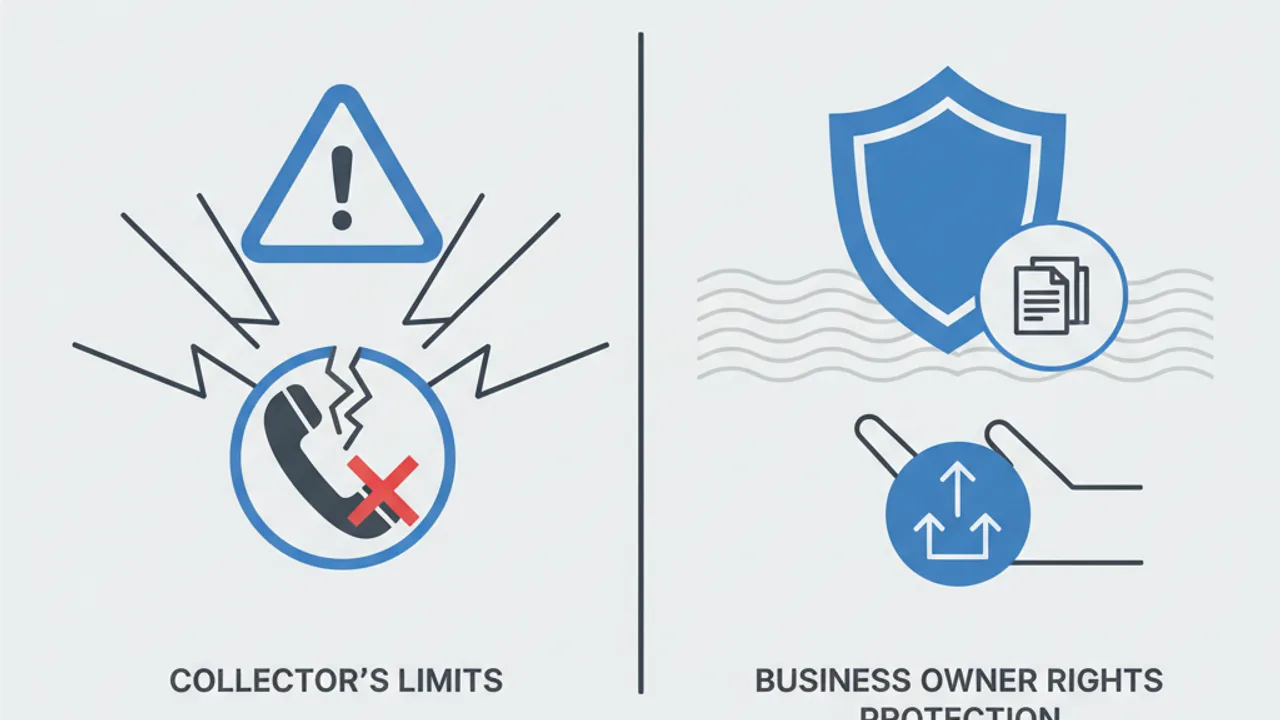
Key Takeaways
- The FDCPA does not apply to MCA debt because MCAs are commercial obligations, not consumer debts.
- MCA collectors can be the original funder, an assigned servicer, or a third-party debt buyer who purchased your balance at a discount.
- State commercial collection statutes and UCC Article 9 still impose meaningful limits on collector conduct.
- You have the right to request validation of the debt and a full chain-of-title if the account has been sold.
- Threatening a lawsuit the collector has no intention of filing, or misrepresenting the amount owed, can still expose them to state law liability.
- Escalating to a commercial collection attorney early is almost always cheaper than waiting until a UCC lien is filed or a lawsuit is served.
When an MCA funder stops receiving daily or weekly remittances, the account moves quickly from account management to active collection. The phone calls start. Demand letters arrive. Sometimes an attorney letter follows within days. If you are dealing with an MCA debt collector right now, the first thing you need to understand is which rules actually apply, because the federal consumer debt collection framework most people are familiar with does not cover you.
This guide walks through who MCA collectors are, what they are legally permitted to do, where the real limits come from, and exactly how to respond at each stage without making your position worse.
Who MCA Collectors Are: Original Lenders, Servicers, and Buyers
Not every entity calling about your MCA balance has the same legal relationship to your debt. That distinction matters a great deal for negotiation and for any legal challenge.
The original funder. Most MCAs are funded by a direct funder or a broker-dealer arrangement where one company holds the receivable. When you default, the first collection contact usually comes from the funder's internal collections team or a dedicated recovery department. They own the paper and have full authority to restructure or settle without involving a third party.
Assigned servicers. Some funders outsource collection to a specialized servicer while retaining ownership of the receivable. The servicer acts as agent and typically has authority to negotiate within preset parameters. If you reach a settlement, the funder still needs to sign off. Always confirm in writing whether you are speaking with the owner of the debt or its servicer.
Third-party debt buyers. A significant portion of defaulted MCA paper is sold into the secondary market. Buyers typically pay between 5 and 25 cents on the dollar depending on the age of the account, documentation quality, and prior litigation history. Once a buyer owns your account, the original funder has no further claim. The buyer has full authority to settle, and because of their low acquisition cost, they are often willing to accept a substantial discount. For more on how the sale process changes your position, see MCA Loan Debt Sales: What Happens When Your Debt Is Sold.
Collection attorneys. Some MCA funders use law firms as their primary collection vehicle from the start. A letter on attorney letterhead signals the funder may be preparing to file suit. Take attorney letters seriously. Review the demand carefully, note the deadline, and do not ignore it.
What MCA Collectors Can Legally Do
Because MCAs are commercial transactions, the collector's toolkit is fairly broad under federal law. Here is what is generally permitted:
Contact you directly and repeatedly. There is no federal commercial analog to the consumer right to demand cessation of contact. A collector can call your business line, your cell, and any number on file multiple times per day without violating federal law. State laws may impose some limits, but they vary significantly.
Contact third parties to locate you. Collectors can call your bank, your registered agent, or business associates to obtain location information. They typically cannot discuss the debt itself with those parties, but the contact is permitted.
Report to commercial credit bureaus. Most MCA funders report to Dun and Bradstreet, Equifax Business, or similar commercial reporting agencies. A defaulted MCA can materially damage your business credit profile and affect your ability to obtain future financing.
File a UCC-3 continuation or amendment statement. If the funder previously filed a UCC-1 financing statement, they can amend, continue, or assign it. This lien on your business assets remains public record and blocks future lenders from taking a senior position.
Pursue legal action. Filing suit in state court is a standard remedy. After obtaining a judgment, collectors can garnish business bank accounts, execute against business property, and in some states attach your ownership interest in the business itself.
Confess of judgment clauses. Some MCA agreements signed in New York contain confession of judgment provisions, though New York law now prohibits their use against out-of-state defendants in most circumstances. If your contract contains one, confirm whether it is enforceable in your state.
What MCA Collectors Cannot Do: Where the Real Limits Are
The FDCPA does not apply to commercial debt, so you cannot invoke its specific protections. However, that does not mean collectors operate without any constraints. Several legal frameworks still apply.
State commercial collection statutes. Many states have enacted unfair trade practice laws, deceptive business practice statutes, or specific commercial collection rules that apply regardless of the consumer or commercial nature of the debt. States including California, New York, Illinois, and Texas have broad unfair business practice statutes that can reach collector misconduct. False or misleading representations, threats of action the collector has no intention of taking, and misrepresentation of the amount owed can violate these statutes even in a commercial context.
Common law fraud and misrepresentation. If a collector tells you that a lawsuit has already been filed when it has not, or that a judgment has been entered when it has not, those statements can form the basis of a common law fraud or misrepresentation claim in most jurisdictions.
Tortious interference. Contacting your customers, vendors, or suppliers in a way that is designed to damage your business relationships, as opposed to simply locating you, can constitute tortious interference with business relations.
Extortion and criminal threats. Threatening to report you to law enforcement unless you pay, threatening to contact your employees about the debt in a way designed to embarrass rather than locate, or threatening physical harm are actionable under criminal statutes in every state.
UCC Article 9 requirements. If the funder holds a security interest in your receivables or other collateral, any repossession or disposition of that collateral must comply with UCC Article 9 commercially reasonable standards. Failure to provide proper notice of a collateral sale can expose the funder to liability and reduce or eliminate any deficiency they can pursue.
For a deeper look at how these rules work together, see MCA Debt Collection Rules and Rights: What Business Owners Need to Know.
State Law Protections That Apply to Commercial Borrowers
Your protection varies significantly by state. Here is a practical overview of the most important jurisdictions.
California. The Unfair Competition Law (Business and Professions Code Section 17200) applies broadly to any business practice that is unfair, unlawful, or fraudulent. Commercial collection tactics that a court finds unconscionable can be challenged here. California also requires that any assignee of commercial debt provide documentation of the assignment before pursuing collection.
New York. New York General Business Law Section 349 covers deceptive acts and practices in the conduct of any business, including commercial debt collection. The state also enacted the Small Business Truth in Lending Act requiring disclosure of key MCA terms, and funders who violated those disclosure requirements may face additional exposure.
Texas. The Texas Deceptive Trade Practices Act covers false, misleading, or deceptive acts or practices in connection with any transaction. Commercial borrowers can invoke it, though the remedies are somewhat narrower than for consumers.
Florida. Florida's Unfair and Deceptive Trade Practices Act similarly extends to commercial transactions and has been used successfully against aggressive collection tactics.
If you are outside these states, consult with a commercial attorney familiar with your state's trade practice statute. Most have some analog that can reach egregious collector behavior.
How to Respond to an MCA Collector
The way you respond in the first 72 hours after initial contact shapes almost everything that follows. Here is a practical protocol.
Do not ignore the contact. Ignoring an MCA collector does not make the account go away. It accelerates the timeline toward litigation. A default judgment is far harder to undo than a negotiated resolution before suit is filed.
Get everything in writing. During any phone call, state clearly: "I want to receive all communications about this account in writing at my business address. I am not agreeing to anything verbally." Do not confirm the balance, do not make a payment arrangement, and do not make any statements that could be interpreted as an admission of the amount owed without first verifying the documentation.
Request a complete account statement and the operative agreement. Ask for the original MCA agreement, the full payment history, and if the debt has been sold, a copy of the purchase and sale agreement or bill of sale showing the chain of title. Legitimate collectors will comply. Collectors who cannot produce the underlying agreement have a significantly weakened legal position.
Do not make a partial payment without a written accord and satisfaction agreement. In some states, making a partial payment can restart the statute of limitations on the full balance and may constitute an implicit acknowledgment of the debt amount as stated.
Document every contact. Keep a call log with date, time, caller's name, company name, phone number, and a summary of what was said. If your state permits single-party consent recording, consider recording calls. States including California require all-party consent, so check your state's law before recording.
When to Escalate: Attorney Representation and Legal Options
There are specific thresholds that should trigger immediate escalation to a commercial attorney.
A lawsuit is filed. You generally have 20 to 30 days to respond after being served with a complaint. Missing that deadline results in a default judgment. A default judgment allows the collector to immediately pursue bank levies, property liens, and wage garnishment in states that permit it.
A confess-of-judgment clause is invoked. If your contract contained a COJ provision, you may have extremely limited time to challenge it before a judgment is entered without prior notice.
A UCC lien is filed on your assets. A UCC-1 filing blocks new financing and can create cascading problems if you need a line of credit or a new MCA to keep operating. Early removal is possible with the right approach, described in detail in MCA UCC Lien Removal.
Collector behavior crosses into actionable territory. If a collector is threatening criminal prosecution, contacting your personal residence, making false statements about the amount owed, or harassing employees, document everything and get counsel involved immediately.
For a broader view of your options, the MCA Debt Relief 2026 Guide covers every resolution pathway from negotiation to restructuring to litigation defense. If you believe a lawsuit is imminent, review What to Do When You Are Being Sued by an MCA Funder before your response deadline passes.
Sources
- CFPB — Debt Collection Rule Overview— Consumer Financial Protection Bureau
- FTC — Consumer vs. Commercial Debt Collection— Federal Trade Commission
- UCC Article 9 — Secured Transactions (Cornell LII)— Cornell Legal Information Institute
- California Unfair Competition Law — Bus. and Prof. Code §17200— California Legislature
Your next step
Collection calls and default are scary. Free options exist. Start with those before paying anyone.