Invoice Factoring: Get Paid Now Without an MCA
Waiting 30-90 days for invoices to be paid? Invoice factoring gives you cash today, and it's way cheaper than an MCA.
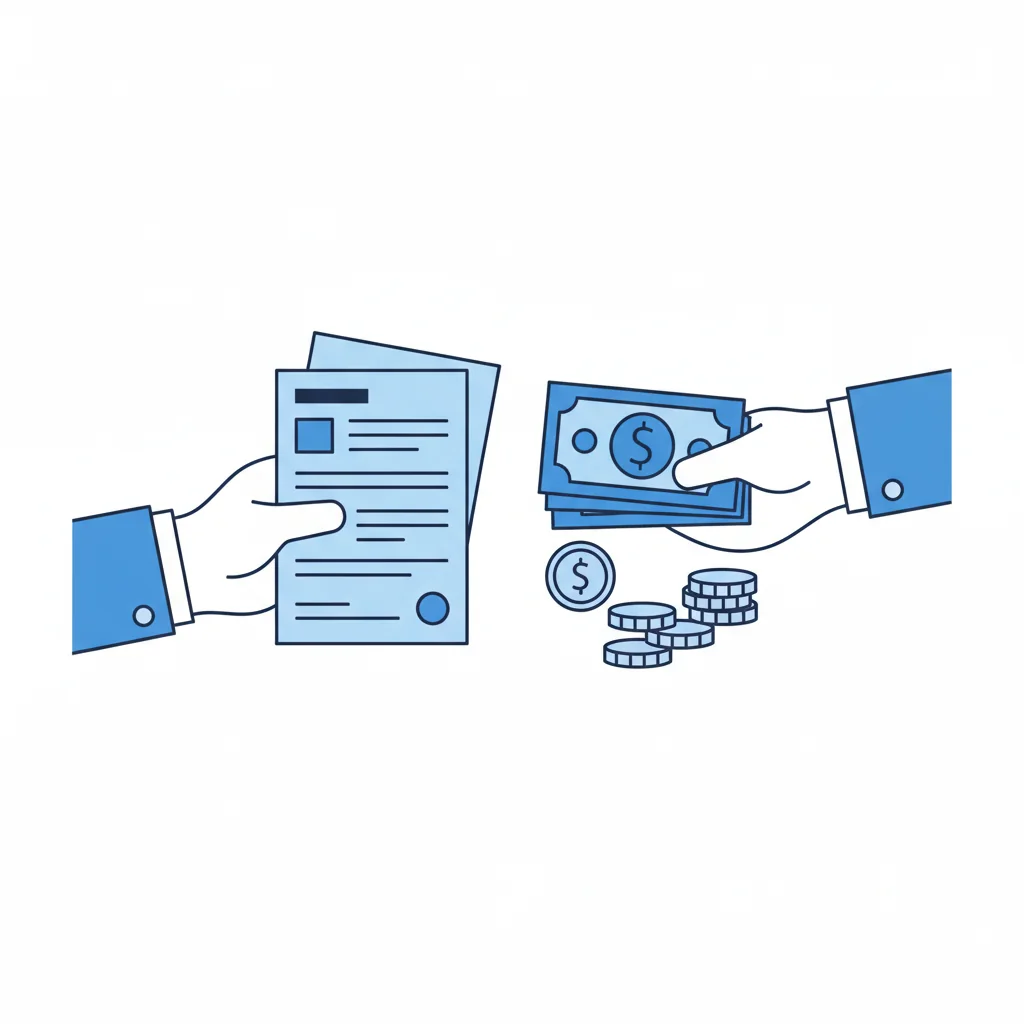
You did the work. You delivered the product or completed the service. Your customer is happy. But they are not paying you for 30, 60, or even 90 days. Meanwhile, you have payroll to cover, rent due, and suppliers expecting payment.
This is one of the most frustrating cash flow problems in business. and it is exactly the situation that drives many business owners to merchant cash advances. But before you sign up for an MCA with a factor rate of 1.30 or higher, there is a smarter option sitting right in your accounts receivable: invoice factoring.
Invoice factoring lets you get paid on your outstanding invoices now, not in 30-90 days. And the cost? A fraction of what an MCA would charge you.
What Is Invoice Factoring?
Invoice factoring is a form of financing where you sell your outstanding invoices to a third-party company (called a factor) at a discount. The factor gives you an upfront cash advance. typically 80-90% of the invoice value. and then collects payment directly from your customer. Once your customer pays, the factor sends you the remaining balance minus their fee.
Here is the key thing to understand: invoice factoring is not a loan. You are not borrowing money. You are selling an asset. your accounts receivable. at a small discount in exchange for getting paid immediately.
This means:
- No debt is added to your balance sheet
- No monthly loan payments
- No personal guarantee required (in most cases)
- The factor's primary concern is your customer's creditworthiness, not yours
How Invoice Factoring Works: Step by Step
Let's walk through the entire process from start to finish.
Step 1: Deliver Your Product or Service and Invoice Your Customer
You complete work for your customer and send them an invoice as you normally would. The invoice has payment terms. typically net-30, net-60, or net-90.
Step 2: Submit the Invoice to a Factoring Company
Instead of waiting for your customer to pay, you submit the invoice to your factoring company. Most factors have online portals where you can upload invoices in minutes.
Step 3: Receive Your Advance
The factoring company verifies the invoice and advances you 80-90% of the invoice value. This usually happens within 24 to 48 hours. For example, on a $50,000 invoice with a 90% advance rate, you would receive $45,000.
Step 4: Your Customer Pays the Factor
Your customer pays the factoring company directly when the invoice comes due. The factor handles all collections, follow-ups, and payment processing.
Step 5: Receive the Remaining Balance Minus Fees
Once the customer pays, the factor sends you the remaining 10% of the invoice value minus their fee. If the fee is 3% ($1,500 on a $50,000 invoice), you would receive $3,500 ($5,000 reserve minus $1,500 fee).
Total received: $45,000 (advance) + $3,500 (remainder) = $48,500 on a $50,000 invoice. The cost was $1,500.
Compare That to an MCA
A $50,000 MCA at a factor rate of 1.30 would cost you $15,000. ten times more than the factoring fee on the same amount. And with the MCA, you have daily payments coming out of your revenue for months.
Recourse vs. Non-Recourse Factoring
There are two main types of invoice factoring, and the difference matters a lot.
Recourse Factoring
With recourse factoring, you are responsible if your customer does not pay. If the customer defaults or pays late beyond a specified period (usually 60-90 days past the invoice due date), you must buy back the invoice or replace it with another one.
Recourse factoring is:
- More common. most factoring arrangements are recourse
- Cheaper. fees are typically 1-3% per month
- Lower risk for the factor. which is why they charge less
Non-Recourse Factoring
With non-recourse factoring, the factoring company assumes the risk of non-payment. If your customer does not pay, you are not on the hook. However, non-recourse protection usually only covers specific situations like customer bankruptcy. not disputes over the quality of work or general payment delays.
Non-recourse factoring is:
- Less common. fewer factors offer it
- More expensive. fees are typically 3-5% per month
- Better if your customers are financially unstable
| Feature | Recourse | Non-Recourse |
|---|---|---|
| Who bears non-payment risk | You (the business) | The factoring company |
| Typical fee | 1-3% per month | 3-5% per month |
| Availability | Widely available | Limited. fewer providers |
| Best for | Reliable, creditworthy customers | Customers with uncertain finances |
For most small businesses with reliable B2B customers, recourse factoring is the better choice because of the lower cost. You already trust your customers enough to do business with them. the risk of non-payment is usually low.
What Does Invoice Factoring Actually Cost?
Invoice factoring fees are usually expressed as a percentage of the invoice value per month (or per 30-day period). Let's break down the real numbers.
Typical Fee Structure
- Discount rate (main fee): 1-5% of the invoice value per month
- Advance rate: 80-90% of the invoice value paid upfront
- Reserve: 10-20% held until the customer pays
Some factors charge a flat fee per invoice, while others charge a rate that increases the longer the invoice remains unpaid. For example, a factor might charge 2% for the first 30 days and an additional 0.5% for every 10 days after that.
Factoring Cost vs. MCA Cost: A Real Comparison
Let's compare the cost of factoring $100,000 in invoices versus taking a $100,000 MCA.
| Metric | Invoice Factoring | MCA (1.30 factor rate) |
|---|---|---|
| Amount | $100,000 in invoices | $100,000 advance |
| Total cost | $2,000-$5,000 (2-5%) | $30,000 (30%) |
| Cash received | $80,000-$90,000 upfront | $100,000 upfront |
| Daily payments | None. customer pays the factor | $700-$1,000+ per business day |
| Effect on cash flow | Positive. accelerates receivables | Negative. daily revenue deductions |
The difference is staggering. Factoring costs you $2,000-$5,000 while an MCA on the same amount costs $30,000. That is $25,000-$28,000 in savings. And with factoring, there are no daily payments draining your bank account.
Pros and Cons of Invoice Factoring
The Pros
- Fast funding. get cash within 24-48 hours
- No debt. factoring is not a loan, so it does not add debt to your balance sheet
- Credit score is less important. the factor cares about your customer's creditworthiness, not yours
- Scalable. as your invoices grow, your available funding grows with them
- Outsourced collections. the factor handles payment follow-up and collections
- Way cheaper than an MCA. typically 1-5% versus 20-50%
The Cons
- Only works if you have invoices. cash-based businesses or B2C companies may not qualify
- Your customers will know. the factor contacts your customers directly, which some business owners find uncomfortable
- Not all invoices qualify. the factor evaluates each customer's creditworthiness
- Fees can add up. if customers pay slowly, monthly fees accumulate
- Contracts may have minimums. some factors require a minimum monthly volume
- You may lose some control. the factor manages the payment relationship with your customers
Watch for Hidden Fees
Some factoring companies charge additional fees for setup, wire transfers, monthly minimums, or early termination. Always ask for a complete fee schedule before signing and read the contract carefully.
Best Invoice Factoring Companies
The factoring industry has dozens of providers. Here are some of the most established and well-reviewed options for small businesses.
Top Providers to Consider
For a full comparison of factoring providers ranked by advance rates, fees, and industry fit, see our best invoice factoring companies guide. Before approaching any provider, it also helps to understand the full cost structure — our invoice factoring rates and fees guide explains discount rates, reserve percentages, and the hidden charges to watch for. Businesses in B2B sectors with large receivables balances should also review our accounts receivable factoring guide, which covers asset-based credit facilities as an alternative to invoice-by-invoice factoring.
BlueVine. One of the largest online factoring companies. Offers advance rates up to 90%, fees starting at 0.25% per week, and a fast online application. Best for businesses with invoices over $5,000. Their platform integrates with popular accounting software.
Fundbox. Known for simplicity and speed. Offers credit lines based on your outstanding invoices. Approval can happen in hours, and fees are transparent. Good for smaller businesses and those new to factoring.
altLINE (by The Southern Bank Company). A bank-owned factoring company that offers competitive rates and personalized service. They work with a wide range of industries and are a good option for businesses that prefer working with a bank-backed institution.
Triumph Business Capital. Specializes in transportation and trucking but also serves other industries. Known for strong customer service and competitive advance rates. Good for businesses with large, recurring invoices.
Riviera Finance. Has been in the factoring business for over 50 years. Offers non-recourse factoring options and works with businesses across many industries. Good for businesses that want protection against customer non-payment.
According to the Commercial Finance Association, the factoring industry advances over $150 billion annually in the United States, making it one of the most established forms of business financing.
How to Choose a Factoring Company
When comparing providers, ask these questions:
- What is the advance rate? Higher is better. look for 85-90%.
- What are the fees? Compare the total cost, not just the discount rate.
- Is it recourse or non-recourse? Know what happens if a customer does not pay.
- Are there minimums? Some require a minimum monthly volume or contract length.
- How fast is funding? Most should fund within 24-48 hours after setup.
- What industries do they serve? Some specialize in specific sectors.
- Are there hidden fees? Ask about setup, termination, wire transfer, and monthly maintenance fees.
Is Invoice Factoring Right for Your Business?
Invoice factoring is an excellent fit if:
- You are a B2B business with outstanding invoices from reliable customers
- Your customers take 30-90 days to pay
- You need cash to cover payroll, supplies, or growth opportunities
- Your personal or business credit is not strong enough for a traditional loan
- You want to avoid adding debt to your balance sheet
- You are currently considering an MCA and want a cheaper alternative
Invoice factoring is probably not the best fit if:
- You are a B2C business (consumers do not typically receive invoices)
- Your invoices are very small (under $1,000 each)
- Your customers have poor credit or a history of non-payment
- You are uncomfortable with a third party contacting your customers
If you are in one of the "not a good fit" categories, check out our guide on emergency business funding alternatives for other options.
Getting Started with Invoice Factoring
Ready to try factoring? Here is what you will typically need to apply:
- Accounts receivable aging report. showing your outstanding invoices
- Three to six months of bank statements
- Business tax returns (one to two years)
- Customer contact information. so the factor can verify invoices
- Articles of incorporation or business license
The application process takes one to five business days for most factoring companies. Once your account is set up, you can submit invoices and receive funding on an ongoing basis. The SBA's guide to alternative financing includes factoring as a recommended option for businesses that need to accelerate cash flow.
Try These Free Tools
- MCA vs Invoice Factoring Calculator — compare costs side by side
- Invoice Aging Calculator — track your outstanding invoices
- Cash Flow Calculator — see your monthly cash flow picture
Frequently Asked Questions
Will my customers know I am using invoice factoring?
How much does invoice factoring cost compared to an MCA?
Can I factor invoices with bad credit?
Is there a minimum invoice size for factoring?
Sources
- Commercial Finance Association. Industry data on factoring volumes and trends in the commercial finance sector.
- U.S. Small Business Administration. Funding Programs. SBA guidance on financing options including invoice factoring for small businesses.
- Federal Reserve. Small Business Credit Survey. Annual data on how small businesses use various financing products.
- SCORE. Invoice Factoring Resources. Free mentoring and educational resources for small business financing decisions.
- Consumer Financial Protection Bureau. Consumer protection guidance on business financing products and practices.