Corporate Turnaround Group 2026: Review, Fees, Results
Is Corporate Turnaround Group worth the fee for MCA debt? Editorial review of fees, service model, public record, and alternatives to consider first.
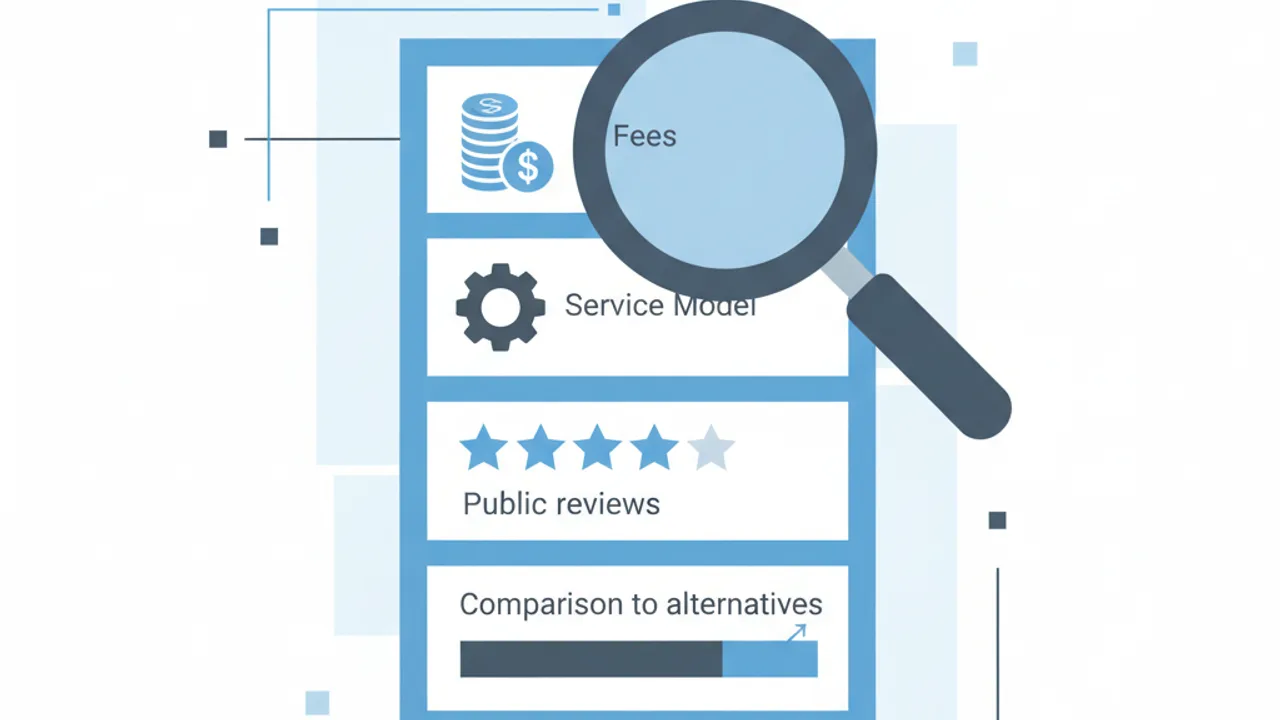
Key Takeaways
- Founded: Founding year not disclosed publicly in a way that is consistently attributable to a single entity. Multiple firms operate under similar names. Confirm the specific legal entity through the state Secretary of State before signing.
- Service model: Firms named "Corporate Turnaround Group" typically market a blend of business restructuring, debt negotiation, and cash flow advisory, with merchant cash advance relief as one component.
- Fees: Fees are typically structured as retainers, project fees, or a hybrid. Specific percentages are not published. Ask for the full schedule in writing.
- Strengths: Turnaround positioning can address debt stacks that pure settlement firms will not handle, such as mixed MCA plus vendor plus tax debt.
- Cautions: Generic name means you must verify you are contracting with the specific entity you intended, not a similarly named firm. Entity-level diligence is the foundation of any engagement.
"Corporate Turnaround Group" is a name used by more than one firm in the business restructuring and debt workout space. That alone is the single most important fact to internalize before any consultation: you must confirm which specific legal entity is actually on the other side of the engagement document. This review covers the general shape of firms operating under this kind of name, with an emphasis on the entity-level diligence every owner should perform before signing. We have not engaged any firm by this name as a client and have no commercial relationship with any of them.
Who Corporate Turnaround Group Is
"Corporate Turnaround Group" is a generic enough name that, as of the time of this review, multiple firms use it or close variants in different markets. Before any consultation, insist on written disclosure of:
- The exact legal entity name (LLC, corporation, or other form).
- The state of incorporation or formation.
- The formation date on file with the state.
- The registered agent.
- Any d/b/a filings under which the firm operates.
- The names of the principals and any professional licenses they hold.
Each piece is verifiable for free. The National Association of Secretaries of State maintains a directory of state business search tools. Look up the entity, confirm formation date and registered agent, and compare against the firm's marketing claims. If there is a mismatch ("operating since 2008" but the entity was formed in 2021), the firm owes you an explanation. Common explanations include: a rebrand, a new entity that acquired prior business, or a legitimate change of form. The point is not that any of these is disqualifying, but that the firm should be able to explain the record rather than dodge the question.
If the firm presents itself as an attorney-led or legally affiliated operation, verify each named attorney's bar status through the state bar's public directory. State bar records include disciplinary actions when they exist. That record sits outside of any review platform and is one of the higher-signal public sources available.
What Services They Offer
Firms using the "Corporate Turnaround Group" name typically offer a broader workout service menu than pure MCA settlement shops. Based on public marketing in the space, the typical service set includes:
- Business diagnostic. A structured review of operating fundamentals, cash flow, debt stack, and viability. The output determines whether a workout is even appropriate.
- Debt restructuring strategy. A prioritized plan covering MCAs, term loans, lines of credit, vendor debt, tax debt, and secured lender positions. The goal is to sequence negotiations to preserve the operating business.
- Negotiation execution. Direct outreach to creditors. For MCA funders, the work parallels a pure settlement firm's process inside the broader workout frame.
- Operational advisory. Cash flow management, vendor relationship rebuilding, and sometimes interim management support.
- Legal referrals. If the firm is not itself a law firm, legal work is referred to outside counsel when needed (for example, motions to vacate confessions of judgment).
This service breadth is the main reason to choose a turnaround firm over a pure settlement firm. If all you have is a stack of MCAs with an otherwise healthy business, the broader workout scope is probably unnecessary. If you have MCAs plus vendor debt plus a tax lien plus a senior lender who is threatening acceleration, a coordinated workout is usually the right shape. For the full list of debt relief paths and when each applies, see MCA debt relief options.
One clarification: a turnaround consultancy is not a law firm unless organized as one. Legal work, when needed, is performed by counsel under a separate engagement. Our MCA attorney complete guide covers when attorney involvement is actually necessary.
Pricing and Fee Structure
Firms under the "Corporate Turnaround Group" banner do not publish standardized fee tables. Turnaround advisory fees typically fall into three patterns:
- Fixed project fee, billed in milestones (diagnostic, plan delivery, negotiation execution, closeout). Predictable and easy to track.
- Monthly retainer, with a defined scope per month. Good for engagements where the timeline is uncertain.
- Hybrid retainer plus performance fee, combining a base monthly retainer with a performance component tied to savings, closed settlements, or other measurable outcomes.
Turnaround engagements tend to cost more than pure settlement engagements because the scope is broader. That can still be the right choice if the broader scope is justified by the situation. The wrong comparison is "turnaround costs more than settlement-only." The right comparison is "does my business actually need the broader services, or am I paying for scope I will not use?"
Before signing, get the full scope, deliverables, fee schedule, what triggers each milestone payment, cancellation terms, and what happens to fees already paid if you terminate the engagement early. Use our MCA debt relief cost calculator to model fees against expected outcomes.
Public Reviews Snapshot
Because the "Corporate Turnaround Group" name is used by more than one firm, the first step in reading any reviews is confirming which entity the reviewer is talking about. Reviews tied to one entity do not transfer to another entity using the same or similar name.
Sources to triangulate, applied to the specific entity you are evaluating:
Better Business Bureau. Look up the exact legal entity on bbb.org. Note accreditation, complaint volume, and themes. Review the firm's responses to understand how it handles disagreements.
Google Business and Trustpilot. Filter to one and two-star reviews first. Real negative reviews include specifics. Identical phrasing across five-star reviews indicates review-farm activity.
Reddit. Based on public reviews on Reddit in r/smallbusiness, r/Entrepreneur, and r/merchantcashadvance, turnaround consultancies receive mixed commentary. Common themes include cost and whether the advisory actually produced a different outcome than a cheaper alternative. Absence of Reddit mentions is weak signal; presence of detailed threads is stronger signal.
Industry coverage. Turnaround firms that participate in industry conferences, publish under named authors, and appear on LinkedIn with identifiable leadership tend to have more public coverage than smaller settlement-only shops. That coverage is a useful diligence source when it exists.
Our broader methodology for reading review sources without getting misled is in the MCA debt relief reviews guide, including a 10-point checklist you can complete in about an hour.
Complaints, Lawsuits, or Regulatory Actions
Because multiple firms use similar names, it is especially important to tie any public complaint or enforcement action to the specific legal entity you are contemplating hiring. General searches for "Corporate Turnaround Group" that return complaints about a different entity are not relevant to the firm you are vetting.
We searched the CFPB complaint database and public state attorney general press release archives for enforcement actions naming the general brand. No public regulatory actions that could be cleanly attributed to a single "Corporate Turnaround Group" entity were identified in our search at the time of this review. This does not mean the public record is clean; it reflects the difficulty of tying generic-name searches to specific entities.
For a specific entity, run the following against the exact legal name: CFPB, FTC, state attorney general (start with the state of incorporation and the states where the firm operates), PACER federal court records, and state court records at the county level. Run these searches yourself before signing any engagement.
Who It Is Good For and Who Should Skip
A turnaround consultancy, assuming the specific entity checks out on diligence, tends to fit the following profile:
- Multi-creditor debt stacks. MCAs plus vendor debt, tax debt, term loans, or lines of credit benefit from coordinated workout rather than one-off negotiations.
- Operating businesses with viable cores. Turnaround assumes the business should continue. If it should not, bankruptcy counsel is a better first call.
- Balances large enough to justify the fee. Turnaround scope is broader and more expensive than pure settlement. Larger balances make the cost proportional.
- Owners who will engage. Turnaround is not a passive process. Owners who will not produce financials or participate in strategy calls will not see results.
Owners usually better served by another path:
- Single-MCA, pre-default situations. DIY or a focused settlement firm is cheaper and likely as effective. Our MCA debt relief vs DIY settlement lays out the math.
- Active litigation. An attorney must lead on court work. See the MCA attorney complete guide.
- Businesses that are not operationally viable. Turnaround delays the inevitable when the business should wind down.
Alternatives Worth Considering
Editorial disclosure: The MCA Guide has a commercial relationship with Coastal Debt Resolve. We disclose this fully on /how-we-make-money. Readers should evaluate all debt relief providers, including Coastal Debt, against the same criteria discussed in this review.
Before committing to any turnaround engagement, compare alternatives. Our best MCA debt relief companies in 2026 compares six firms with different models. For focused MCA settlement without broader advisory, a narrower firm may cost less for the same outcome. For active litigation, see the MCA attorney complete guide.
For the full landscape including SBA 7(a) refinance, reverse consolidation, and DIY paths, see the pillar MCA debt relief 2026 complete guide and the MCA debt consolidation guide.
Sources
- CFPB Complaint Database— Consumer Financial Protection Bureau
- PACER federal court public records— Administrative Office of the U.S. Courts
- SBA 7(a) Loan Program— U.S. Small Business Administration
- National Association of Secretaries of State business search directory— NASS
- National Association of Attorneys General— NAAG
How to evaluate any MCA debt relief company
Names matter less than process. These six criteria matter more than any star rating.